
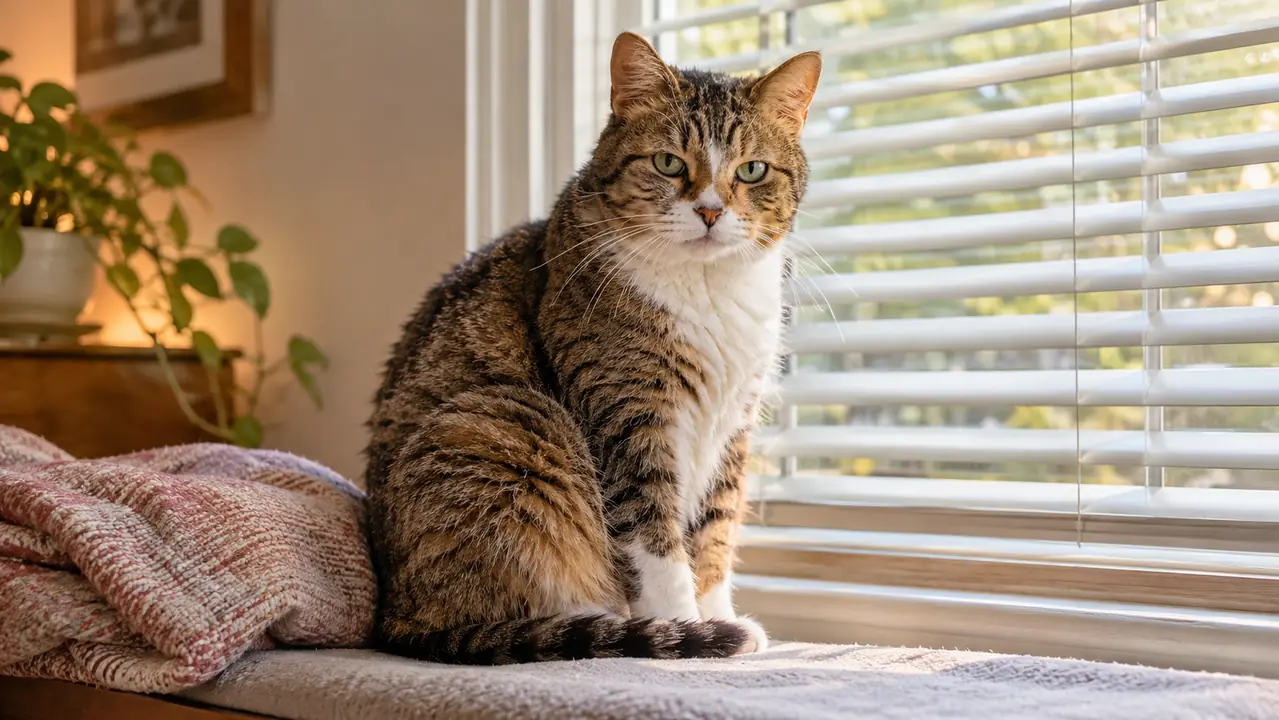
Biscuit is fourteen, about eleven pounds, and he used to be on the bedroom windowsill before I finished my coffee. These days he takes the stairs one at a time and pauses at the top like he is doing math. Our vet called it mild arthritis in his hips and back legs and gave me the honest version she gives everybody: a joint supplement may support comfort and mobility, it will not reverse anything, and results vary from cat to cat. That is how I ended up with two containers on my kitchen counter, a bottle of Nutramax Cosequin for Cats sprinkle capsules and a liquid glucosamine a neighbor swore by. I spent twenty-two years as a veterinary technician in a small-animal clinic, so I have opened a lot of both for other people's cats. And here is what those years taught me: the question is never which product is stronger on paper. It is which one actually gets into the cat.
Short answer, then I will show my work. For most cats, Cosequin for Cats is the easier place to start, because the amount is already measured and there is less to go wrong. You open a capsule, you know exactly what went onto the food, and you can cut it in half without guessing. Liquid glucosamine wins on one specific cat, and it is not a rare one: the cat who eats four bites of wet food and walks away. A liquid stirred into four bites goes into the cat. A powder sprinkled over four bites often does not. If your cat cleans the bowl, take the capsule. If your cat grazes, read the liquid section before you decide.
| Cosequin for Cats | Liquid Glucosamine | |
|---|---|---|
| Format | Sprinkle capsule, opened and mixed into food | Liquid, measured with a dropper |
| Joint ingredients per serving | 125 mg glucosamine HCl plus 100 mg sodium chondroitin sulfate per capsule, printed on the label | Varies by formula, printed per milliliter |
| Splitting a starting amount | Tap out half the powder with reasonable accuracy | Half a dropper is guesswork |
| Cat that eats a few bites and leaves | Powder can sit in the bottom of the dish | Coats every bite the cat takes |
| Cat that licks the gravy and abandons the meat | Powder stays on the meat | Mixes into the part the cat actually wants |
| Storage and travel | Shelf stable bottle, no refrigeration, no spills | Many formulas want refrigeration once opened and need a shake |
| Hands that ache in the morning | Twisting a small capsule open every day | A dropper is gentler on the wrists |
| Households with more than one cat | One capsule, one cat, no shared measuring | Shared bottle, redose by weight each time |
| Best for | Cats who finish a full portion | Cats who graze through the day |
What Is Actually in Each One
The Nutramax label is unusually easy to read, which I appreciate after years of squinting at tiny print in a treatment room. Each capsule carries 125 mg of glucosamine hydrochloride, 100 mg of sodium chondroitin sulfate, and manganese. The package is 80 capsules and it is chicken flavored. The bottle is small, about 1.75 by 1.75 by 3.5 inches and 1.44 ounces, so it lives in the drawer next to the cat food without taking over the drawer. It is a capsule, not a chew and not a tablet, and that matters for a cat with sore teeth or a cat who will not be pilled. You twist the capsule open and the contents go onto the food.
A liquid glucosamine is a different proposition, and I want to be fair to it. The ones I have handled dose by dropper or by milliliter rather than by capsule, and many of them are blends rather than single-ingredient products, so how much glucosamine your cat actually receives depends entirely on the formula. That number is on the label. It is not on the front of the bottle in large letters. The other practical difference is storage. Many liquid formulas want refrigeration once they are open, and they separate a little between uses, so you shake before you measure. None of that is a flaw. It is just a different set of morning habits.
Where Cosequin for Cats Wins
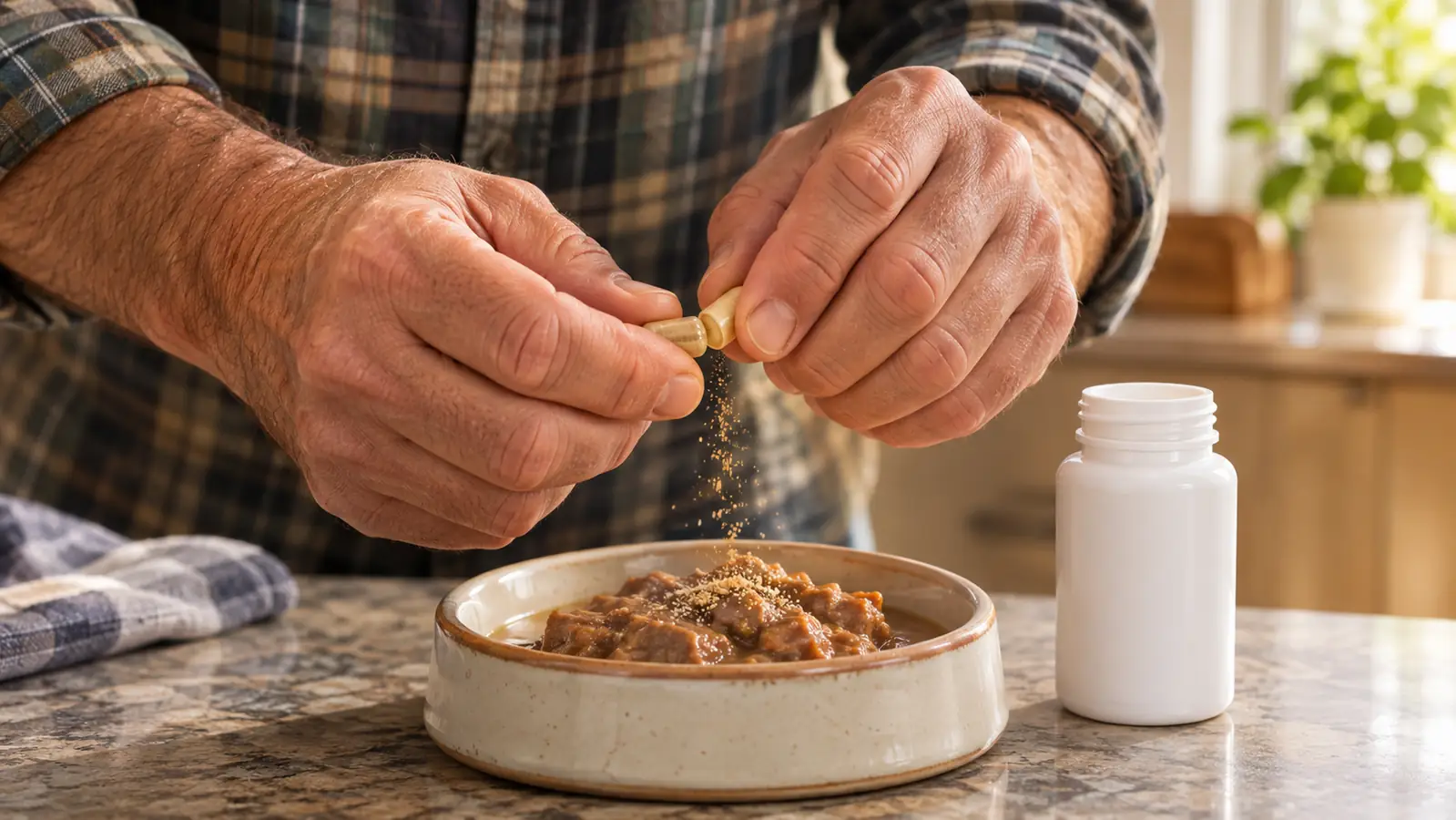
The first advantage is arithmetic. A capsule is a fixed amount, and a fixed amount is the only thing that lets you change a dose with any confidence. If your vet wants your cat on half the labeled amount while you see how he tolerates it, you open the capsule and tap out roughly half. If your cat is doing well after six weeks, you and your vet have a real number to talk about instead of a vague squirt. I have watched a lot of owners try to eyeball half a dropper of a thick liquid at seven in the morning, and I have watched the same owners guess wrong. With a capsule the math is done before you get to the kitchen.
The second advantage is that a capsule does not rewrite the meal. Cats decide whether to eat based on smell and texture before they ever taste anything, and a sprinkle capsule stirred into a teaspoon of wet food leaves the rest of the breakfast alone. Then there is the plain practicality of a small, shelf-stable bottle that does not need refrigeration and does not leak in a suitcase. If you travel with your cat, or if you are the person doing the measuring at six in the morning before your own coffee, the capsule is the lower-friction object in the drawer. Nutramax has been making this format a long time, more than twenty-five years as a company, and it shows in how little there is to think about. One twist, one stir, done.
Where Liquid Glucosamine Wins
Now the honest part. If your cat is a grazer, the liquid wins and it is not close. Biscuit went through a stretch last winter where he ate a few bites, walked away, and came back an hour later for two more. Powder sprinkled over that first small portion is powder the cat may never finish. A liquid coats every bite, including the suspicious bites a cat takes while deciding whether this is food. When the entire meal is four bites, the delivery method is the whole ballgame. I have seen cats hold out on powder for weeks and accept the same supplement as a liquid on the first try.
The second place liquid earns its keep is with the cat who objects to anything new on the tongue. Powder can leave a faint film on wet food, and some cats lick around it and leave a ring of damp powder on the saucer, which is the most expensive ring of powder in the house. Stirred liquid disappears into the moisture. I will also say this for the owner, not the cat: twisting open a small capsule every single day is harder than it sounds if your hands are arthritic or if you have had surgery on a thumb. A dropper is gentler on the wrists. That is not a small consideration in a household where the person doing the dosing is sixty-three, like me.
If Your Cat Cleans the Bowl, Start Here
An 80 count bottle of chicken flavored sprinkle capsules, 125 mg of glucosamine hydrochloride and 100 mg of sodium chondroitin sulfate in each one. Small bottle, no refrigeration, no dropper to lose.
Amazon Check Today's Price on Amazon →A 125 mg capsule and a dropper are not competing ingredients. They are competing delivery systems, and the cat picks the winner, not the label.
The Sprinkle Mistake I See Most
Here is the mistake, and I made it myself the first week. The owner sprinkles the capsule over the whole breakfast. The cat eats two thirds of the breakfast. The last third goes into the bin with most of the dose sitting in it. Two weeks later the owner reports that the supplement did nothing, and technically the owner is right, because the cat never got all of it. What I do instead is use a vehicle: a teaspoon of wet food, the powder stirred in, set down first, and the rest of the meal only after that spoon comes back clean. It takes ninety extra seconds and it is the difference between a real dose and a hopeful one.
The other half of that habit is a note on the calendar. If you skip a morning, do not double the next one. If you switch from liquid to capsules, do not switch foods in the same week, because then you will not know which change caused the refusal. And if your cat vomits or the stool loosens after you start, stop and call your vet rather than adjusting the amount yourself. I am not a veterinarian anymore and nothing here is a dosing instruction. Your cat's weight, kidney values, and other medications all matter, and a five minute phone call settles it faster than anything you read online.
A Two Week Introduction That Does Not Backfire
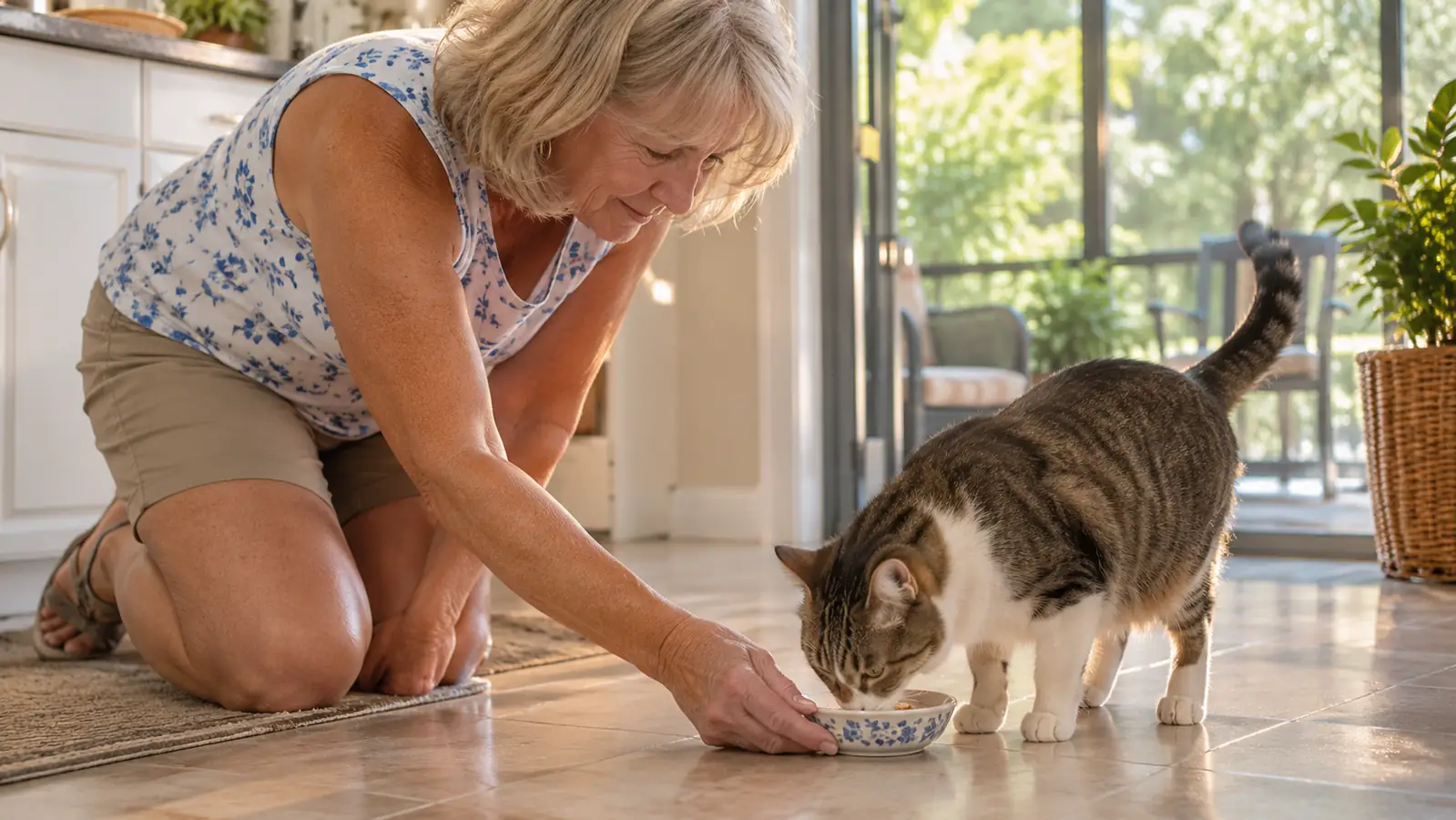
Whichever one you choose, the introduction has the same shape. Days one through three, put a pinch of powder or a reduced liquid amount on the teaspoon of wet food and change nothing else: same dish, same spot, same time, same food. Days four through seven, move to the labeled amount, still on the spoon. If your cat refuses two days running, back up a step instead of pushing through, because a cat who decides breakfast is suspect is far harder to win back than a cat who never tried it. Do not add a new flavor of food in the same week. That is how you turn a supplement problem into a food problem.
Then keep a written note, and make it a specific one. Not seems better. Write down whether he uses the windowsill, how many attempts the jump takes before he commits, whether he takes the stairs one at a time or in a run, and whether he is grooming his back legs the way he used to. Those details tell you in six weeks whether anything changed, and they give your vet something more useful than a feeling. Judge at six to eight weeks, not six days. Joint comfort is a slow thing, and a cat who is having a good week can fool you in either direction.
What Neither One Does
Neither of these products treats arthritis. I want that in plain words, because the labels cannot say it and a lot of marketing quietly implies it. Glucosamine and chondroitin are building blocks, and the research in cats is thin compared with what exists for dogs. What owners usually report, when they report anything at all, is subtle: the cat goes up the stairs in one motion again, or lands the jump onto the windowsill on the first try instead of the third. That is worth having. It is not a cure, and a cat who is visibly painful, lame, or hiding under the bed needs a vet visit before a supplement.
There is also a weight conversation, and it is not the fun one. Biscuit is eleven pounds, which our vet calls reasonable for his frame, and every extra pound on a cat with sore hips is a load the joint did not ask for. A supplement alongside a cat who is carrying too much weight is a much smaller lever than the weight itself. If I could only do one thing for a cat with mild arthritis, it would be the weight and the warm sleeping spot by the window, not the bottle. The bottle is what you add once those are already handled.
Who Should Buy Which
Buy Cosequin for Cats if your cat finishes a full portion of wet food and leaves a clean dish, if you want an amount you can halve without guessing, if you travel with your cat, or if you have two cats and want to know that each one got its own capsule. Buy a liquid glucosamine instead if your cat eats small meals across the day, licks the gravy and abandons the meat, or if opening a small capsule every morning is hard on your hands. If you genuinely cannot tell which cat you have, start with the capsule and use the teaspoon method for two weeks. If the saucer keeps coming back with powder drying on it, you have your answer, and you have lost two weeks rather than two months.
The Bottle That Fits in the Drawer Next to the Cat Food
80 chicken flavored sprinkle capsules from Nutramax, about 1.75 by 3.5 inches. Open one over a teaspoon of wet food, set it down first, and let the cat tell you the rest. Ask your vet about the right amount for your cat's weight.
Amazon See the Cosequin Sprinkle Capsules on Amazon →