
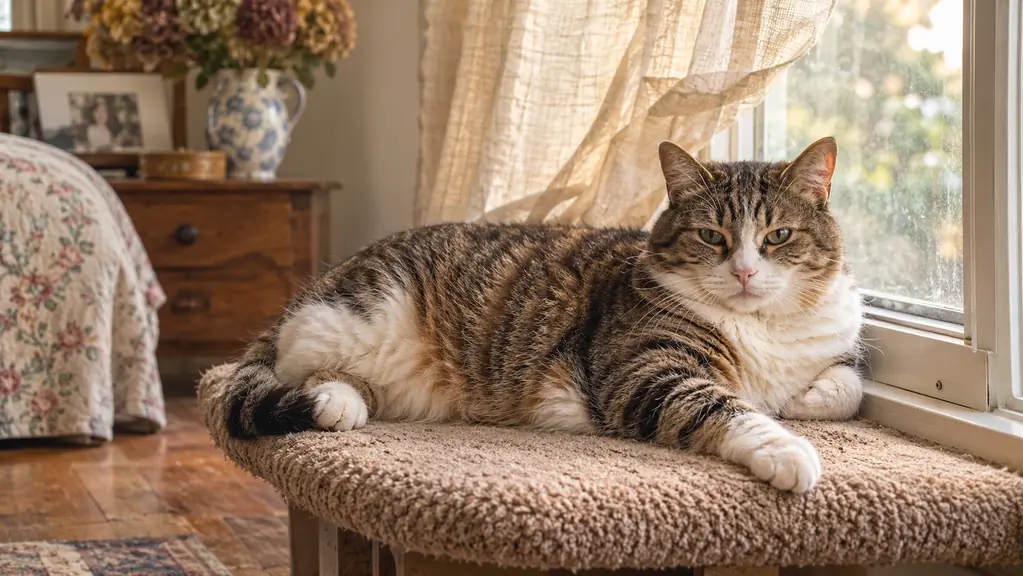
Biscuit stopped jumping onto the bedroom windowsill last April. He is a 14-year-old orange tabby, about 11 pounds, and our vet had diagnosed mild arthritis in his hips and back legs the year before. When a cat who has claimed the same sunny perch every morning for a decade suddenly quits, that is a data point. Then he started taking the stairs one at a time, front paws together, back paws together, like a cat counting to himself on the way up.
I spent 22 years as a veterinary technician in a small-animal clinic before I retired to Sarasota, so I have a fairly clear idea of what a joint supplement can and cannot do. It will not rebuild cartilage. It will not reverse arthritis. What it can do, in some cats, is take enough of the edge off that they are willing to move again, and a cat who is willing to move is a cat who keeps what muscle and range of motion he still has. I started Biscuit on Pet Honesty Senior Cat Joint Chews for the most ordinary reason there is. A woman I trust had used them on her own cat, and they come in chicken flavor, and Biscuit has never met a chicken he did not want to eat.
The Quick Verdict
A chicken-flavored crunchy chew with a real ingredient list that a picky senior cat will actually finish. Six months in, Biscuit is back on the windowsill about half the time and the stairs are less of an event. It is not a cure, it has to be given every single day, and it will not suit a cat who cannot chew.
Amazon Check Today's Price →The chicken chew a 14-year-old cat will actually finish
Pet Honesty Senior Cat Joint Chews, 300 count, chicken flavor. Glucosamine HCL from shellfish, green lipped mussel, calcium fructoborate and manganese sulfate in a crunchy bite. Check today's price and current availability on Amazon.
Amazon Check Today's Price on Amazon →How I've Used It
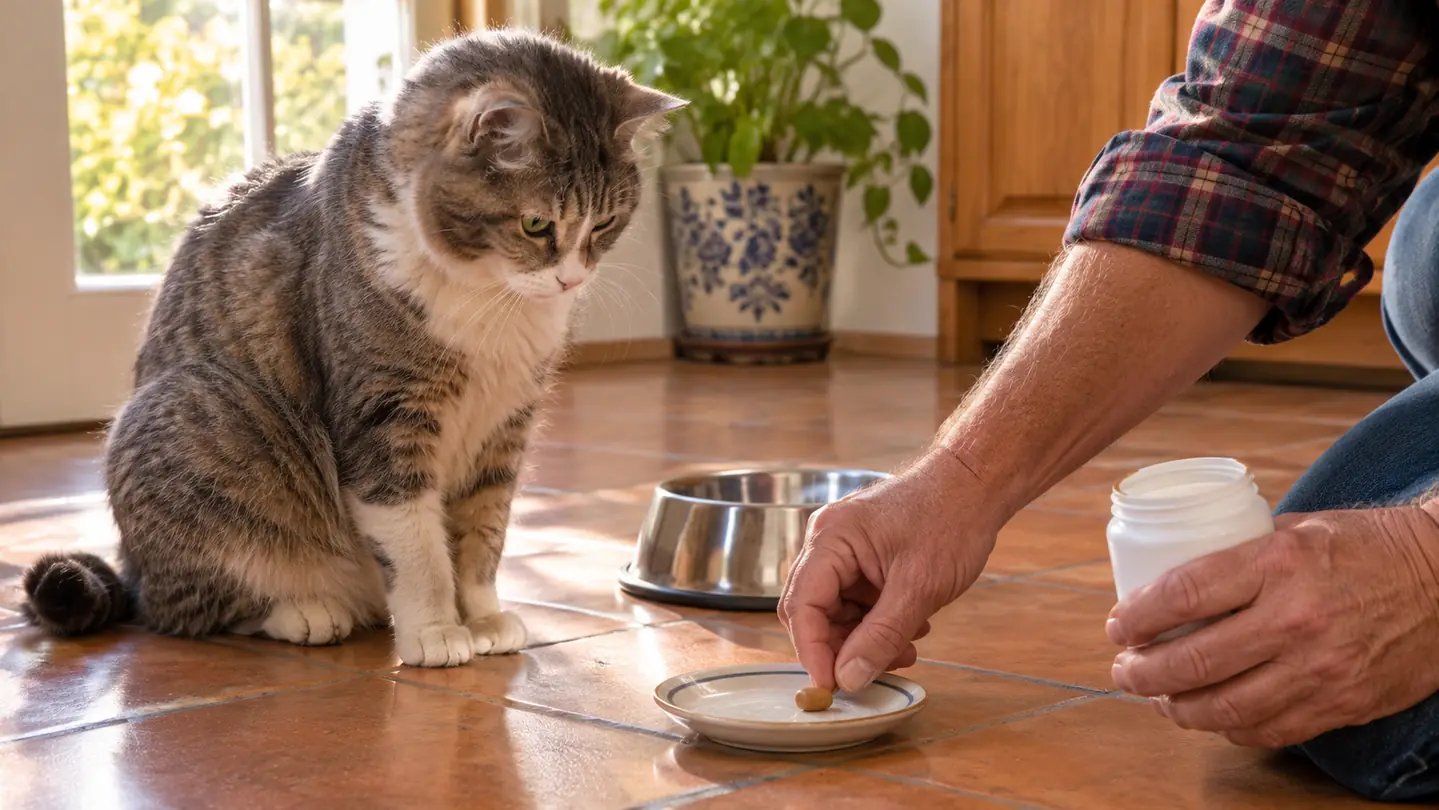
The container is small, roughly 7 by 4 inches and a little over an inch deep, holding 300 crunchy bites, and it lives on the kitchen counter next to Biscuit's bowl because that is where I will actually remember it. The routine is the same every morning. I put his wet food down, I set the chews on a small saucer beside it, and I stand there until he has finished them, because if I walk away he will eat the wet food and leave the chews sitting there like a small accusation. I follow the label's dosing for his weight rather than guessing, which is the part people skip.
I want to be honest about the first two weeks, because this is a long-term review and the beginning matters. He ate them. He did not love them. He chewed one, looked at me, chewed another, and left the third. The brand says nine out of ten cats like the flavor, which is a fine number and a true one for a lot of cats, but there is always a tenth cat, and mine has spent fourteen years being the tenth cat about everything. What fixed it was crumbling the bites over the wet food for a few days and then backing off. By week three he was taking them dry off the saucer with no fuss at all.
Since then it has been every morning without a gap, which for me is the whole test of a supplement. A product that gets skipped three days out of seven is not doing much of anything. The chewing is the other part I watch. Biscuit still has good teeth, and a crunchy bite gives him a little mechanical work at the front of the mouth that a soft capsule does not. That is not a joint benefit, it is just a pleasant side effect of the form.
What's Actually Inside These Chews
The active ingredients on the label are glucosamine HCL from a shellfish source, green lipped mussel, calcium fructoborate and manganese sulfate. The listing bullets also name chondroitin and omega 3 fatty acids as part of the formula. This is a conventional joint stack, and I mean that as a compliment. Glucosamine is the ingredient most studied for supporting joint comfort in older animals, green lipped mussel brings omega 3s along with it, and calcium fructoborate is a boron source that shows up in human joint formulas. Manganese sulfate is a trace mineral cofactor. None of it is exotic and none of it is a breakthrough. It is the standard set of tools, in a form a cat will eat, which is where most joint products fall down.
The label also lists antioxidant, digestive health, heart health and immune support among the product benefits, and I would treat those as secondary. You are buying this for hips and back legs, not for a general wellness upgrade. The allergen line says non-GMO, and the flavor is chicken, which is the reason this works in my house at all. A supplement a cat refuses is a supplement you wasted money on, no matter how good the label looks.
What I appreciate most is what is not on there. There is no drizzle of something to make it taste like dessert, no dye to make it look appealing to the human holding the container. It reads like a formula built by someone who expected a cat to eat it without a sales pitch.
What Changed Over Six Months
I kept a note on the refrigerator, which sounds more disciplined than it was. Once a week I wrote one line about how he moved. Weeks one through three, the lines say things like normal, no change, still on the floor. Weeks four through eight, they start saying up on the low perch, came into the kitchen on his own. Around week ten he went back to the bedroom windowsill. Not for the whole morning the way he used to. Twenty minutes, then down. But he went.
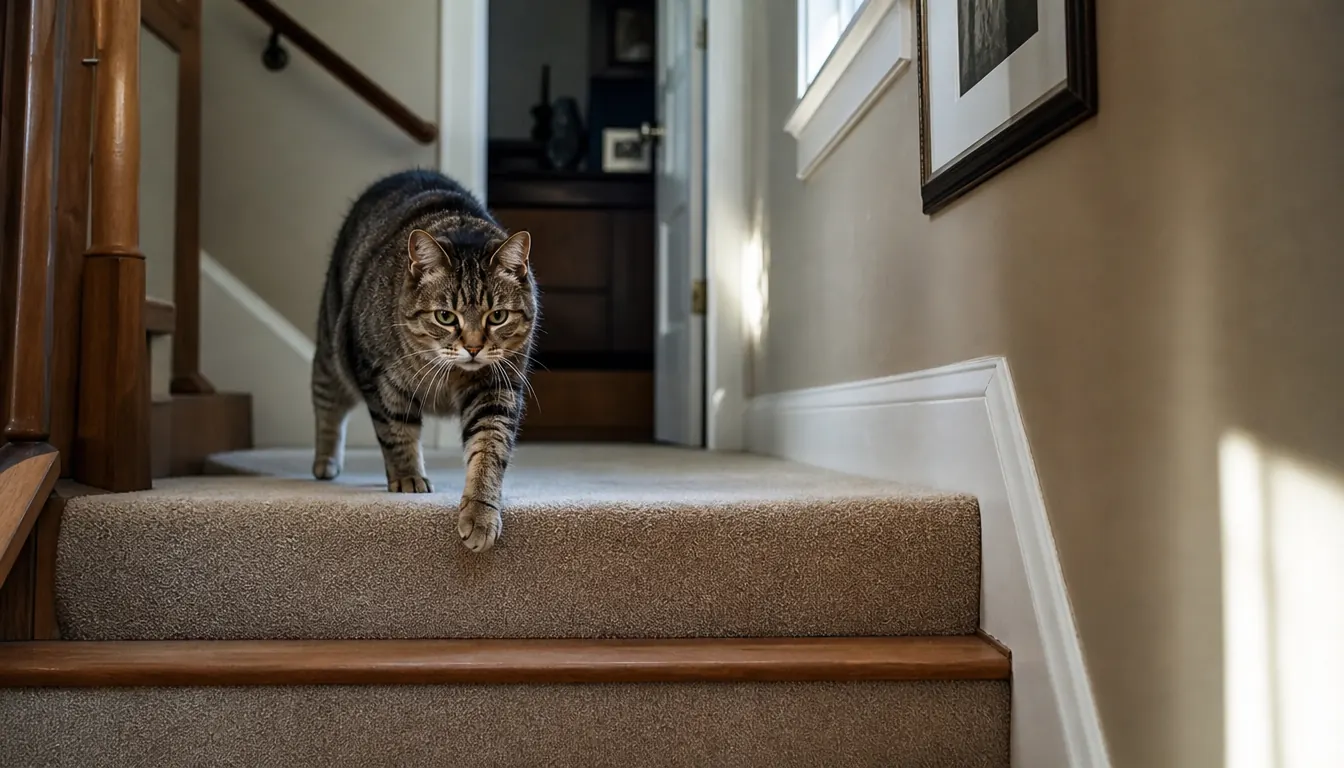
The stairs changed more gradually and less dramatically. He still takes them one at a time, and I do not expect that to stop, because some of that is a 14-year-old cat being careful rather than a 14-year-old cat in pain. What changed is that he no longer stops at the bottom and thinks about it. He used to stand there, look up the staircase, and then go find somewhere on the ground floor to sleep instead. Now he goes up. That decision, more than any leap, is what convinced me this was doing something.
I also want to be clear about the limits of what I saw, because I read a lot of joint supplement reviews that sound like a resurrection. He is not a kitten again. He does not sprint down the lanai. On a cold morning after a long night he is still stiff for the first few minutes, and he still prefers the low perch to the high one. Six months bought me a cat who moves more willingly at home. That is worth something, and it is not everything, and I would rather you hear both halves of that.
The change is not that he leaps. It is that he stops at the bottom of the stairs, looks up, and goes, instead of turning around and finding somewhere on the ground floor to sleep.
The Crunchy Texture Problem
The bites are crunchy, and for most senior cats that is fine or even good. For some it is a dealbreaker. Cats with dental disease, missing molars, stomatitis or a known sensitive mouth will often refuse anything that requires real chewing, and a cat who refuses the chew is a cat getting zero of the ingredients. If your cat has had extractions or you have seen him drop food out of the side of his mouth while eating, ask our vet before you buy 300 of anything. The softer alternative is a capsule you open and sprinkle, and there is a real tradeoff there, which I get into below.
The other texture issue is crumb. A crunchy bite in a cat's mouth produces small pieces on the floor, and if you feed on carpet you will notice. I feed on tile, so this is a minor gripe for me and a genuine annoyance for someone else. Crumbling the bites over wet food, which I did for the first few weeks, mostly solves it because the crumbs get eaten with the food.
What I Liked
- Chicken flavor that a genuinely picky 14-year-old cat will finish off the saucer
- Conventional, recognizable joint stack: glucosamine HCL, green lipped mussel, calcium fructoborate, manganese sulfate
- Crunchy bite form gives a cat real chewing work instead of a soft gel he can spit out
- 300 count, so one container lasts a long stretch at a daily dose
- Small container that fits on a counter without taking over the kitchen
Where It Falls Short
- Not suitable for cats with dental disease or a sensitive mouth, and that rules out a lot of seniors
- Took about three weeks of crumbling over wet food before my cat would take them dry
- Crumbles on the floor, which is noticeable if you feed on carpet
- Has to be given daily without gaps or you are mostly wasting the container
Where It Falls Short
The hardest thing to tell you is that this will not work for every cat, and you cannot know which cat you have until you try. I have seen glucosamine do close to nothing in a cat with advanced changes on an x-ray, and I have seen a modest response in a cat whose arthritis was caught early. Biscuit was the second kind, and I would be lying if I framed that as the product's doing rather than luck plus timing. If your cat is at the stage where he is dragging a back leg or has stopped grooming his lower half, a chew is not the answer. That is a vet visit, and probably more than one thing at once.
The other gap is that this is a supplement, not a pain plan. Our vet has Biscuit on a weight management plan and a monthly injection, and the chews sit alongside that, not instead of it. If you are looking for something to replace a prescribed anti-inflammatory, this is not it and it was never going to be. Ask your vet what the full plan should look like, including what your cat weighs now versus what he should weigh, because in a cat with arthritis the single biggest lever is usually the scale.
How It Compares to Powders and Capsules
The main alternative is a capsule you pull apart and sprinkle over wet food. The advantage is that it gets into the cat without any chewing at all, which matters for a cat with a bad mouth, and you can dial the dose more precisely. The disadvantage is that you are at the mercy of whether he finishes the bowl. Biscuit is a bowl-licker, so a sprinkle would probably work, but I have had foster cats who eat around a powder with the precision of a surgeon, and for those a chew that gets eaten first, before the food, is far more reliable.
Soft chews and gels are the other common option. They are easier on the mouth, but a soft chew can be licked and dropped, and I have watched cats carry one three feet from the bowl and leave it. The crunchy bite in the Pet Honesty formula has the practical advantage of being gone in a few seconds. None of these forms changes what the ingredients do. They change whether your particular cat actually gets them, and that is the only question worth asking.
Who This Is For
This is for the owner of a senior cat who has quietly stopped doing things. The jump onto the couch, the windowsill, the top of the cat tree, the stairs. Not a cat in crisis, but a cat who has narrowed his world down to the ground floor and you have noticed. It suits a cat with good teeth who eats enthusiastically, and an owner who can commit to a daily routine and keep a rough note of what changes. It also suits someone who wants a chew their cat will take without a fight, because that is the whole reason I stayed with these after the first rocky two weeks.
Who Should Skip It
Skip it if your cat has dental disease, missing teeth, or a mouth you know is sore. Skip it if your cat is a bowl-grazer who walks away and comes back, because the chews will sit there and go soft. Skip it if you are looking for something to replace veterinary care, or if your cat has not been examined and diagnosed, because arthritis is not the only thing that makes a senior cat stop jumping and a vet needs to rule out the rest. And skip it if you know in your heart you will not manage it every single day. A supplement given four days a week is money on the counter. If any of that is you, talk to your vet about the right form and the right plan before you buy anything, then decide.
If your cat has quietly given up the windowsill, start here
300 chicken-flavored chews, one daily routine, six months of watching one cat decide the stairs were worth climbing again. Check today's price on Amazon, and run the plan past your vet first.
Amazon Check Today's Price on Amazon →