
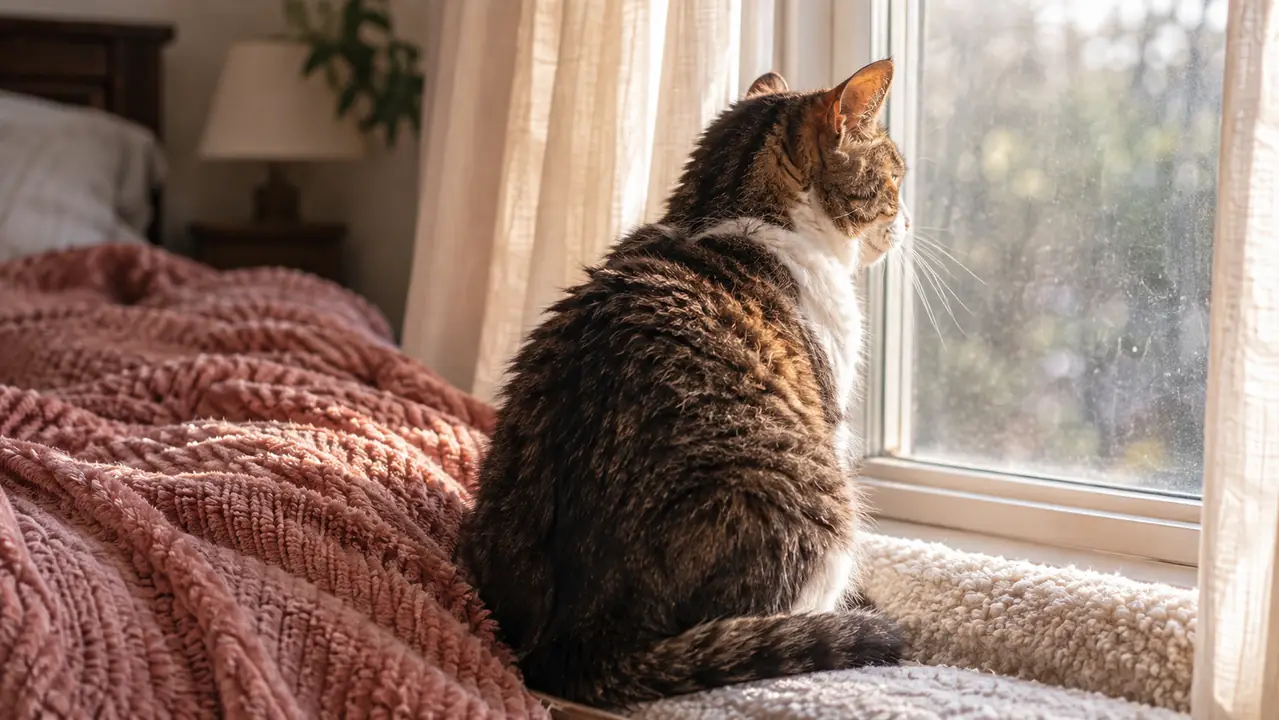
The windowsill in our bedroom is low, maybe two feet off the floor, and for eleven years Biscuit made that hop look like nothing at all. Then last March I watched him put his front paws up on the sill, hold there for a second, and drop back to the carpet. He tried again. Same result. Then he walked to the hallway and took the stairs one step at a time, back leg first, like a man testing ice.
He is a fourteen-year-old orange tabby, about eleven pounds, and our vet had already used the word mild when she talked about the arthritis in his hips and back legs. That is the part nobody warns you about. There is no single bad day to point at. I spent twenty-two years as a veterinary technician in a small-animal clinic, so I knew the sensible first move was a phone call to our vet, not a shopping cart. She confirmed what we suspected, told us to keep his weight steady, and said a fish oil was a reasonable thing to add. I settled on Nordic Naturals Omega-3 for cats, the unflavored liquid in the 2 ounce bottle.
The Quick Verdict
A plain, well made fish oil that mixes into wet food without a fight. Six months in, Biscuit uses the stairs in one motion again. It is a support supplement and not a painkiller, and a cat who refuses oil will refuse this one too.
Amazon Check Today's Price →If your cat has started negotiating with the stairs, start here
Wild-caught fish oil with EPA and DHA, unflavored liquid in a 2 ounce bottle, made to the same standard as the Nordic Naturals human line. I work it into a spoonful of Biscuit's evening wet food and he has never once turned his nose up.
Amazon Check Today's Price on Amazon →How I've Used It
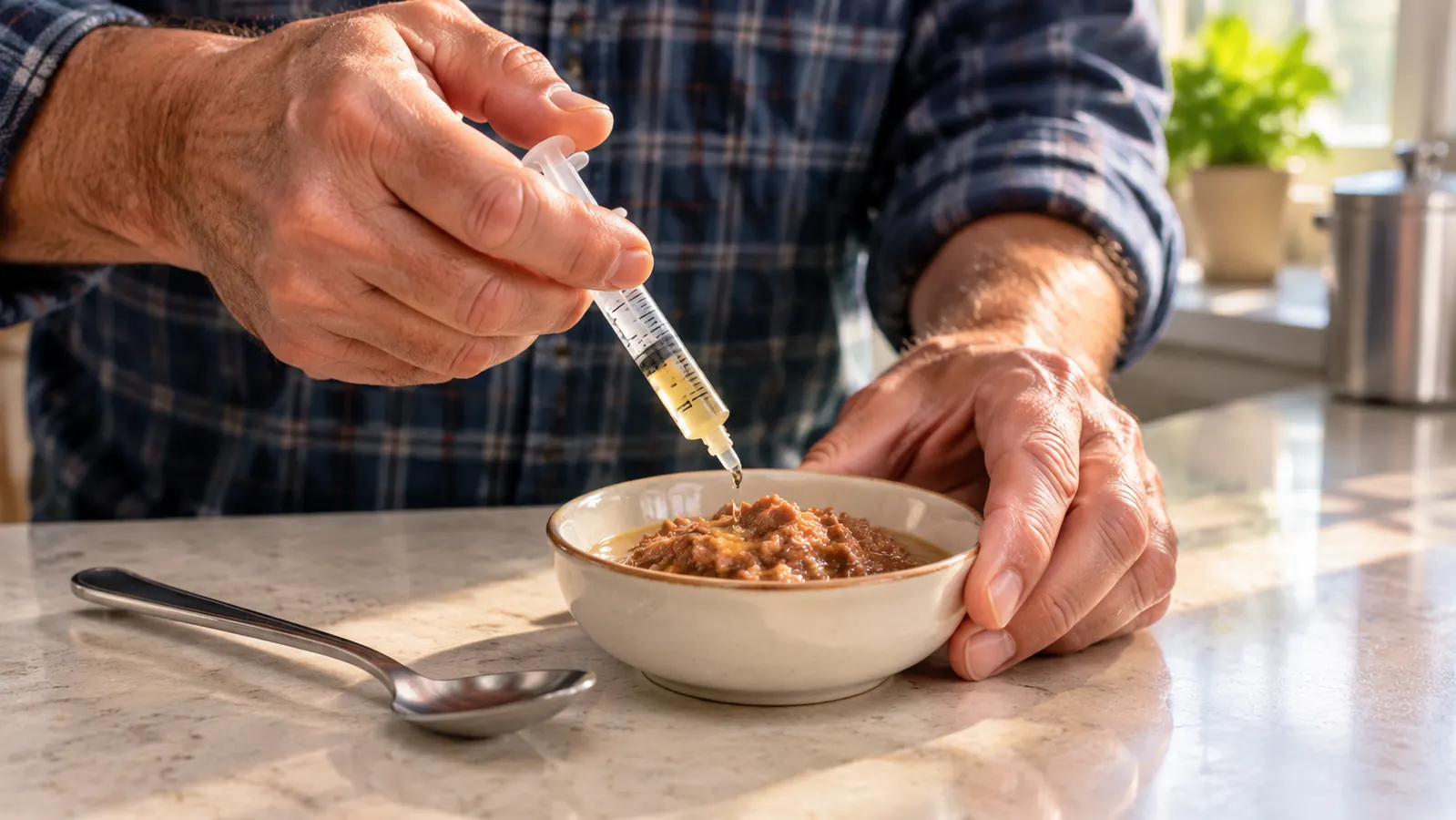
We started in the second week of March, on our vet's dosing, which she worked out from Biscuit's weight and the strength of the oil. The routine is unglamorous and takes about ninety seconds. At six in the evening I put a spoonful of his wet food into a small dish, measure the oil out, work it through the food with the back of the spoon so it is not sitting in a puddle, and set that down before the rest of his dinner. He eats it in under a minute and then looks at me for the real bowl.
The first week I gave him half of what she recommended, which is an old clinic habit I have never dropped. If a cat is going to have loose stool or bring a supplement back up, I would rather find that out on a small amount than a full one. He was fine. No vomiting, no change in the litter box, no suspicion of the food. I moved to the full amount on day eight and we have stayed there since.
I keep the bottle in the fridge door and I keep a note taped inside a kitchen cabinet with the date I opened it, because the bottle is small, just under five inches tall, and it disappears behind the mustard if you are not paying attention. I also wrote one sentence about Biscuit every Sunday. Not a score, just a sentence. Did he use the stairs, did he get on the sill, did he sleep in his usual spot or somewhere new. That notebook is the only reason I can tell you anything useful now, because six months is long enough that you will absolutely misremember how bad things were in March.
The other thing I did, and this mattered more than the oil, was put a rubber-backed mat at the top and bottom of the stairs. Biscuit slipped once in January on the bare wood, and a cat who slips once starts thinking about every landing. Between the mat, the two low ramps, and a steady weight, his environment did at least as much work as anything in the bottle.
What's Actually in the Bottle
The label facts are simple. It is a liquid fish oil carrying EPA and DHA, the two omega-3 fatty acids that get studied for joint comfort and general inflammation support in older animals, and the listing itself files the product under coat and immune support. Nordic Naturals puts it in what they call the triglyceride molecular form, which is the form those fatty acids take in actual fish, and they say it is the same quality of oil they use in their human products. The fish is wild caught and every batch is tested for purity, which for a fish oil means heavy metals and oxidation. None of that is exotic. It is the reason I picked this bottle over the row of cheaper ones on the shelf.
It is unflavored, and that sounds like a small detail until you have tried to hide a flavored supplement in a cat's dinner. Cats are not dogs. A dog will eat around most things and forgive you. A cat will smell a change from across the room and walk away wearing an expression of deep personal insult. This oil mostly disappears into wet food, and the fish smell that is left is a smell Biscuit already associates with dinner, so it reads as food rather than medicine.
It also has a 4.2 star average across more than 2,400 ratings, and if you read the low ones they are almost all the same complaint: the cat would not touch it. I believe every one of those reviews. This is a good product that depends entirely on a cat who will eat wet food with something in it, and that is not every cat.
What it is not matters just as much. It is not a pain medication. It is not a joint supplement with glucosamine or green lipped mussel in it. It will not rebuild cartilage or reverse anything. It is fat, which means it carries calories, and it is a supplement, which means the evidence behind it is softer than the evidence behind the prescription options your vet can offer. If Biscuit were in obvious pain I would not be leaning on this. He is not, at least not yet, and this is the gentle layer we added on top of weight control and two low ramps I put at the stairs.
What Changed Over Six Months
The honest timeline is slow and undramatic. Nothing happened in the first three weeks. I want to be clear about that, because the internet is full of people who claim their cat was leaping onto counters after ten days. Nothing happened, and I kept going, because fish oil is not that kind of thing and I have watched enough owners quit a supplement at week two and conclude it does not work.
Around week six I noticed his coat. Biscuit has always had a decent coat and it got a little softer and a little brighter, which the listing does mention as a use. That was the only change for a while and it was not the change I was watching for. Month three is when I first thought the stairs looked different. It was not faster exactly. It was smoother. He stopped doing the little stop and restart at the third step, the one I had been hearing without really hearing it.
Month four was the first time I watched him go up the stairs in one continuous motion instead of three separate decisions.
Month five he got back on the windowsill. Once. He did the same two paw check he had done in March, and this time he committed, pulled himself up, and sat in the sun for twenty minutes like he had never left. He does it now maybe two days out of three. He is not the cat he was at ten. He still takes the stairs carefully when he is tired, and he still has days where he sleeps more than he moves, and I do not want to sell you a version of this where that stopped being true.
Here is the part that keeps me honest. I cannot prove the oil did any of that. He also lost a little weight over the winter, he has two ramps now, and cats have good weeks and bad weeks with arthritis no matter what we feed them. What I can tell you is that nothing got worse, his litter box stayed consistent for six months, and the only thing that changed in his routine was the oil. If you want certainty, a supplement will never give it to you. If you want a low risk thing to try while you do the things that actually work, this is a reasonable one.
The Dosing Part Nobody Warns You About
Two things trip people up, and neither one is on the label in a way that helps you at seven in the evening. The first is measuring. This is a liquid, not a chew, so you need a way to get a small amount out of a narrow bottle without pouring half of it over the counter. I use a small oral syringe from the clinic with the tip trimmed off, which sounds fussier than it is. When my hands are shaky I measure into a little dish first and then mix that into the food.
The second is the food itself. Do not dump the oil on top of a full bowl and walk away. Put a small amount of wet food in a separate dish, work the oil through it, and give that first, before the rest of the meal. If your cat is suspicious of anything new, start with a quarter of the amount for a few days and build up. The oil is a fat, and a cat who gets a large amount too quickly will sometimes have soft stool, which is another good reason to go slowly.
One 2 ounce bottle lasted us a little over two months at Biscuit's amount, so this is not a once a year purchase. It is a small bottle that lives in the fridge and runs out on a schedule you have to stay ahead of. I buy two at a time now, and I write the open date on the note so I am never guessing whether the bottle in the door is three weeks old or three months old.

What I'd Tell a Friend Considering It
Call your vet first. That is not a disclaimer I am pasting in to cover myself. Older cats hide pain well, and there are things that look like arthritis which are not arthritis at all, and arthritis itself has better options than a supplement, including weight control, ramps, soft bedding, and prescription pain relief when it is genuinely needed. Fish oil is a layer on top of the plan. It is not the plan.
Then give it time and give it fairly. Three months minimum, with one written note a week, and do not change three things at once or you will never know which one helped. If your cat refuses it after a real two week try with the mixing routine, stop and do not feel bad about it. There is no point in fighting a cat over a supplement. There are other forms and other products, and your vet can point you at them without any drama.
What I Liked
- Unflavored liquid that works into wet food with no fight in our house
- Carries both EPA and DHA, in the triglyceride form naturally found in fish
- Wild-caught fish with every batch tested for purity
- Same quality of oil as the Nordic Naturals human line
- Small 2 ounce bottle, easy to store in the fridge door and easy to measure a small dose from
- Six months of daily use with no stomach upset and no change in the litter box
Where It Falls Short
- It is still fish oil, and some cats will refuse it however carefully you mix it
- The change is slow and impossible to prove in a single cat
- No glucosamine or other joint ingredients, so it is not a complete joint supplement
- A 2 ounce bottle runs out in about two months, so it becomes a standing order
- You need your vet to set the amount, which means a phone call before you begin
- It is not a painkiller and will not touch a cat who is genuinely hurting
Who This Is For
This is for the owner of an older cat who has started to hesitate. The cat who stands at the bottom of the stairs and thinks about it for a beat too long. The one who used to be on the counter and now is not, and cannot tell you why. If your vet has ruled out the scarier possibilities and told you it is ordinary arthritis, and you want something gentle to add while you work on weight and access, this is a sensible pick. It also suits a cat who eats wet food reliably, because that is the whole delivery system. And it suits an owner who is willing to keep a notebook, which sounds like a chore and turns out to be the most useful thing I did all year.
Who Should Skip It
Skip it if your cat is in obvious pain, because this will not touch that and you will lose weeks you could have spent on real relief. Skip it if your cat inspects every bite and walks away from anything that smells different, because you will waste most of a bottle and feel like a failure over something that is not your fault. Skip it if you want one product that covers joints completely, since there is no glucosamine in here and it is not built to be that. And skip it if you are not going to keep a record, because without one you will be guessing in three months, and guessing is how people end up staying on a supplement for two years with no idea whether it ever did a thing.
Six months, one small bottle, one cat back on his windowsill
Nordic Naturals Omega-3 for cats is an unflavored liquid with EPA and DHA, wild-caught fish, batches tested for purity, in a 2 ounce bottle that fits in the fridge door. Ask your vet about the amount for your cat, then give it three months and write it down.
Amazon Check Today's Price on Amazon →