
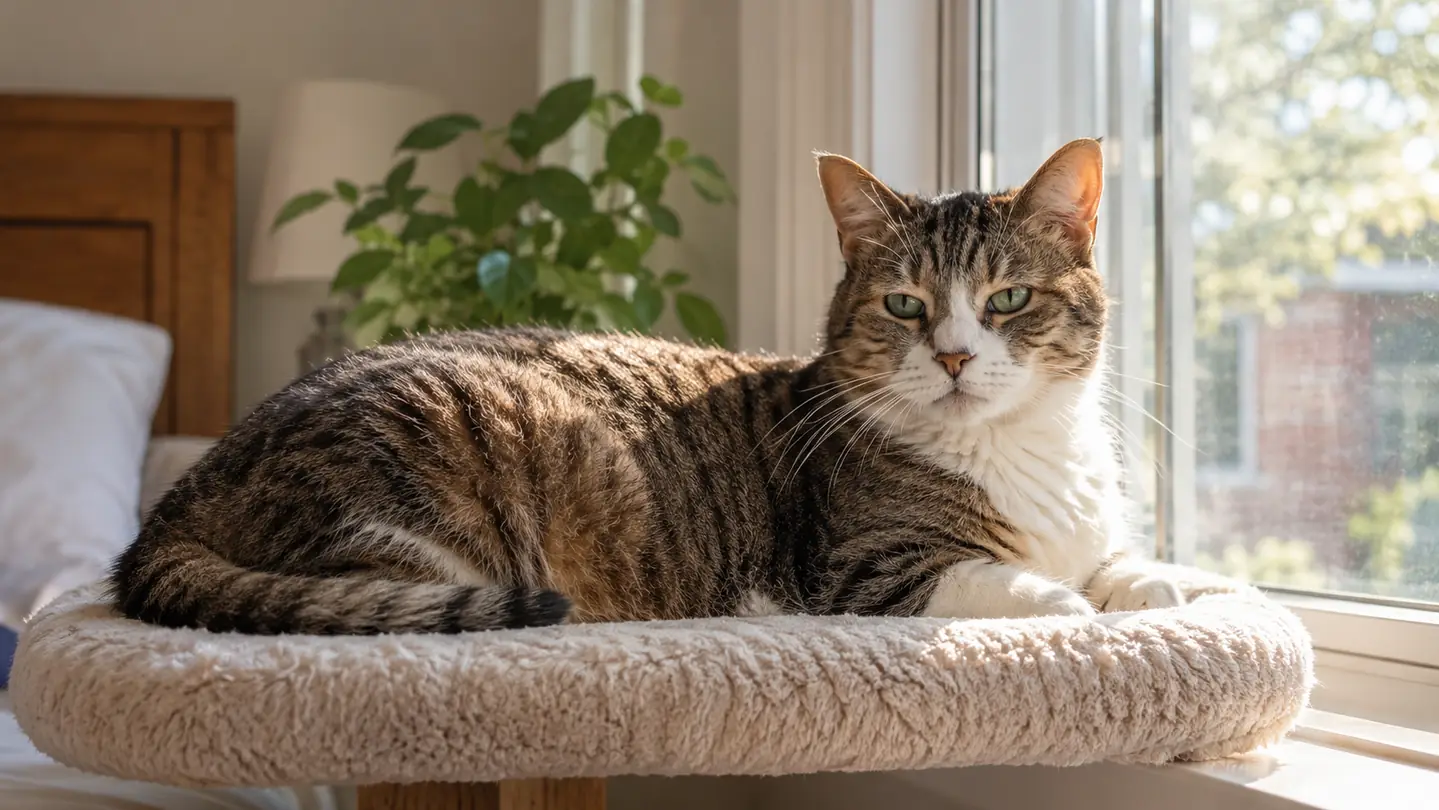
I have watched a lot of cats get careful. Biscuit, my 14-year-old orange tabby, is one of them. He is about 11 pounds and was diagnosed with mild arthritis in his hips and back legs. A while back he stopped jumping onto the bedroom windowsill, and now he takes the stairs one step at a time. When people ask me whether they should use Nordic Naturals Omega-3 for Cats or a salmon oil, I understand the confusion. Both are liquids. Both are marketed for skin and coat. Both contain omega-3s. But they are not the same kind of purchase, and the difference matters most when you are trying to help a senior cat stay comfortable.
My short answer is this. Nordic Naturals Omega-3 for Cats is the more documented choice if you want a cat-specific liquid with EPA and DHA named as active ingredients, an unflavored form, and a brand that talks about triglyceride form and batch purity. A salmon oil can be a reasonable choice if your cat loves the taste of salmon, you have checked the maker, and you are willing to accept that EPA and DHA levels vary from product to product. Neither one is a treatment for arthritis. Neither one replaces a vet exam, pain control, weight management, or a plan for the litter box and stairs. I would not start either without a call to your vet.
| Nordic Naturals Omega-3 for Cats | Salmon Oil | |
|---|---|---|
| Omega-3 form | Brand states triglyceride molecular form, the form found in fish | Naturally occurring, but form is not always stated on the label |
| EPA and DHA on the label | EPA and DHA are named active ingredients | Varies by brand; some list amounts, some do not |
| Purity testing | Brand states every batch is purity guaranteed | Depends on the maker; ask for a certificate of analysis |
| Flavor | Unflavored liquid | Natural salmon taste and aroma |
| Picky cats | Unflavored oil may blend into food with less notice | Salmon aroma can draw in a fish-loving cat |
| Ingredient simplicity | A cat-specific product with EPA and DHA as active ingredients | Single-ingredient salmon oils are easy to find; read the label |
| Familiarity for owners | A supplement brand with a cat-specific label | A traditional oil many cat owners have used for years |
| Best for | Owners who want a documented, unflavored fish oil | Fish-loving cats and owners comparing simple oils |
Where Nordic Naturals Omega-3 for Cats Wins
The first win is disclosure. The label gives me EPA and DHA as active ingredients, not a vague fish oil blend. For a retired vet tech, that is the first thing I check. The listing also says the oil is in the triglyceride molecular form, the form naturally found in fish, and that every batch is purity guaranteed. I cannot verify a batch from my kitchen, but I can tell you that this is the kind of language I want to see. It gives me something to ask the company about. It also tells me the product is made for cats, not just repackaged for cats. The brand says it uses the same exceptional quality oil as its human products. I treat that as a sourcing statement, not a promise about Biscuit's hips.
The second win is the form. It is a liquid, unflavored, 2 oz (60 ml) product. The listed dimensions are 1.81 by 1.81 by 4.38 inches, and the item weight is 4.8 ounces. That is a small footprint in the refrigerator door, which matters when you are already storing a senior cat's food, medications, and maybe a joint supplement. Unflavored does not mean tasteless. It means the maker is not adding a salmon flavor on top. For a cat who is suspicious of new smells, that can be easier to work with. For a cat who wants fish, it can be a letdown.
The third win is sourcing. The listing says fresh, wild-caught, omega-rich fish. That is a sourcing statement, not a clinical promise. I treat it as a starting point. It does not tell me the product will help Biscuit's hips. It tells me the brand is willing to describe what goes into the liquid. That is more than some salmon oils do. At the clinic I kept a shoebox of empty supplement bottles that owners brought in with their questions. When someone asked whether a fish oil was any good, I turned the bottle over and read the back. Plenty of them named a fish and nothing else. No EPA, no DHA, no testing statement, no species beyond the word salmon. That shoebox taught me more about the supplement aisle than any brochure. When a label tells you which fish went in and that the batch was tested, that is not marketing. That is a paper trail you can follow with a phone call.
Where Salmon Oil Wins
Salmon oil wins on aroma and acceptance for many fish-loving cats. I have seen cats turn away from an unflavored oil and then lick a salmon oil off the spoon. The smell is familiar. The taste is stronger. If your cat is a healthy eater who already loves salmon, that can be the difference between a supplement that gets into the cat and one that gets into the trash. This is not a small point. A supplement your cat will not eat is not doing anything.
Salmon oil also wins on simplicity if you choose a single-ingredient product. Some owners want one ingredient and nothing else. That is a fair preference. You can read the label and know what you are getting, provided the maker is clear about species, sourcing, and testing. The catch is that salmon oil is not a standardized drug. The EPA and DHA content can vary with the fish, the season, and the maker. A container that says salmon oil does not tell you the amount of EPA and DHA unless the label states it. If the label is vague, the product is vague. That is the tradeoff.
If you want the cat-specific liquid with the label spelled out, start here
Nordic Naturals Omega-3 for Cats is the one I would compare every salmon oil against: unflavored, 2 oz, with EPA and DHA named as active ingredients. Ask your vet if a fish oil is right for your cat, then read the label.
Amazon Check Today's Price on Amazon →What the Label Tells You
I do not pick a fish oil by the front of the label. I pick it by the back. For a cat, the first question is whether the product is made for cats. The Nordic Naturals listing says the target species is cat. That is not a guarantee of safety, but it tells me the maker is aiming at the cat market. The next question is whether EPA and DHA are named. They are. The third question is whether the maker says anything about purity. This one says every batch is purity guaranteed. I want all three.
A salmon oil label can be just as good. It can also be a lot less clear. I look for the species of fish, the parts used, the EPA and DHA amounts, and a statement about testing. I once spent twenty minutes in a pet store aisle holding a bottle that listed salmon oil, a net weight in ounces, and a phone number. Nothing else. No species, no EPA, no DHA, no testing statement. I put it back. The clerk told me it was the store's best seller. It may have been a fine oil. I had no way to know, and neither did he. If a salmon oil label gives me none of that, I pass. If it gives me all of it, I do not reject it just because it is not Nordic Naturals. The brand is not the point. The information is the point.
I also look at the form. Nordic Naturals says triglyceride form. That is the form naturally found in fish. A salmon oil is also a triglyceride oil by nature, but the label may not say so. That does not make it bad. It makes it less documented. For an owner who wants to compare products, documentation is the whole game.
The Senior Cat Question
Biscuit is the reason I care about this. He is 14, about 11 pounds, and his vet found mild arthritis in his hips and back legs. He stopped jumping to the windowsill. He takes the stairs one at a time. I do not expect a fish oil to make him a kitten again. I expect it to be one small part of a larger plan that includes weight control, soft bedding, a low litter box, and whatever our vet recommends for pain. If a product promises more than that, I trust it less. I called our vet's office the week he started hesitating on the stairs. The tech on the phone asked three questions: is he still eating, is he still using the box, and is he still grooming. He was doing all three. That is why we booked an exam instead of panicking. The exam found the arthritis. The plan came after. A supplement came last, not first.
That is why I get annoyed by supplement copy that sounds like a cure. Omega-3s may support joint comfort and mobility. They may support skin and coat. They do not reverse arthritis. They do not replace pain medication. They do not work overnight. If you are expecting a sudden change, you will be disappointed by both Nordic Naturals and salmon oil. If you are looking for a reasonable addition to a vet-led plan, either can be considered.
I also watch the cat, not the calendar. With Biscuit, I note how he takes the stairs, whether he jumps on the low perch, and whether he is still using the litter box without hesitation. Those are the things that matter. A coat can look shinier and a cat can still be in pain. Do not let a nice coat fool you.
How I Would Introduce Either One
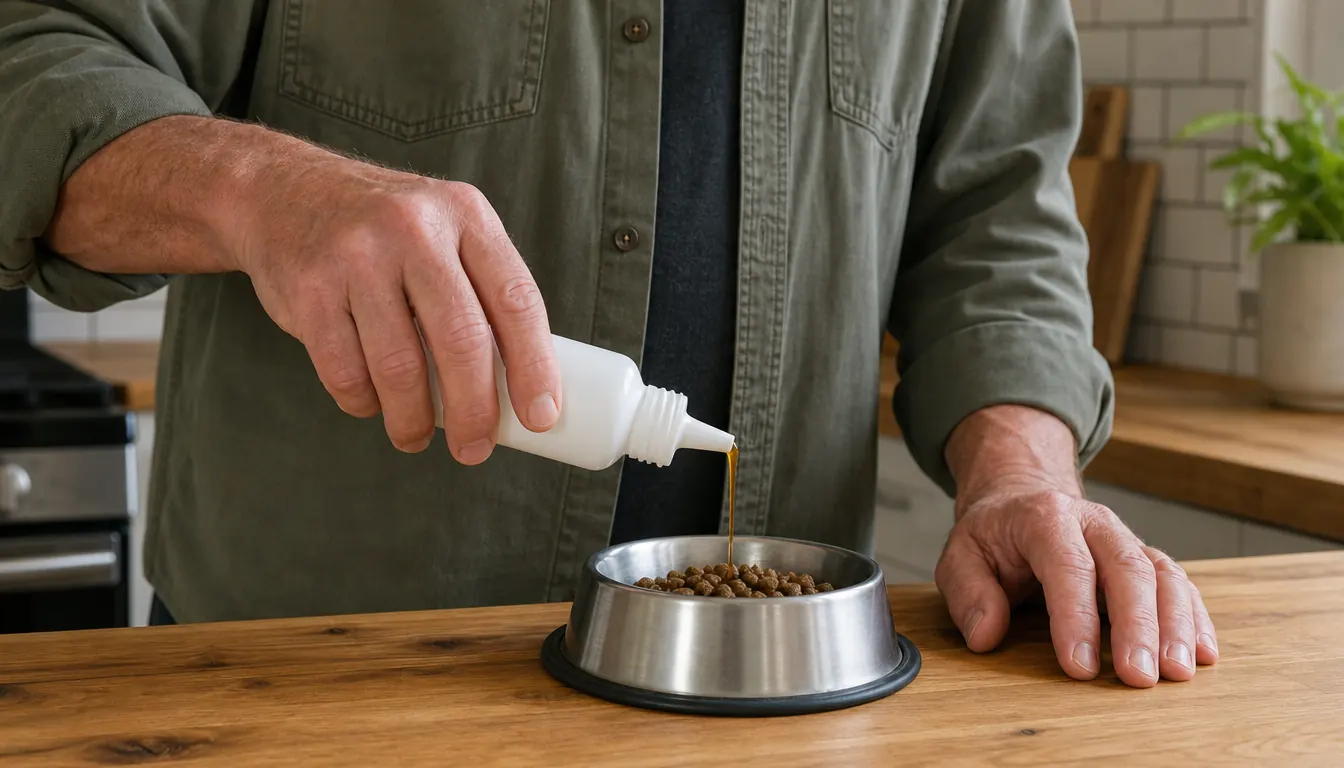
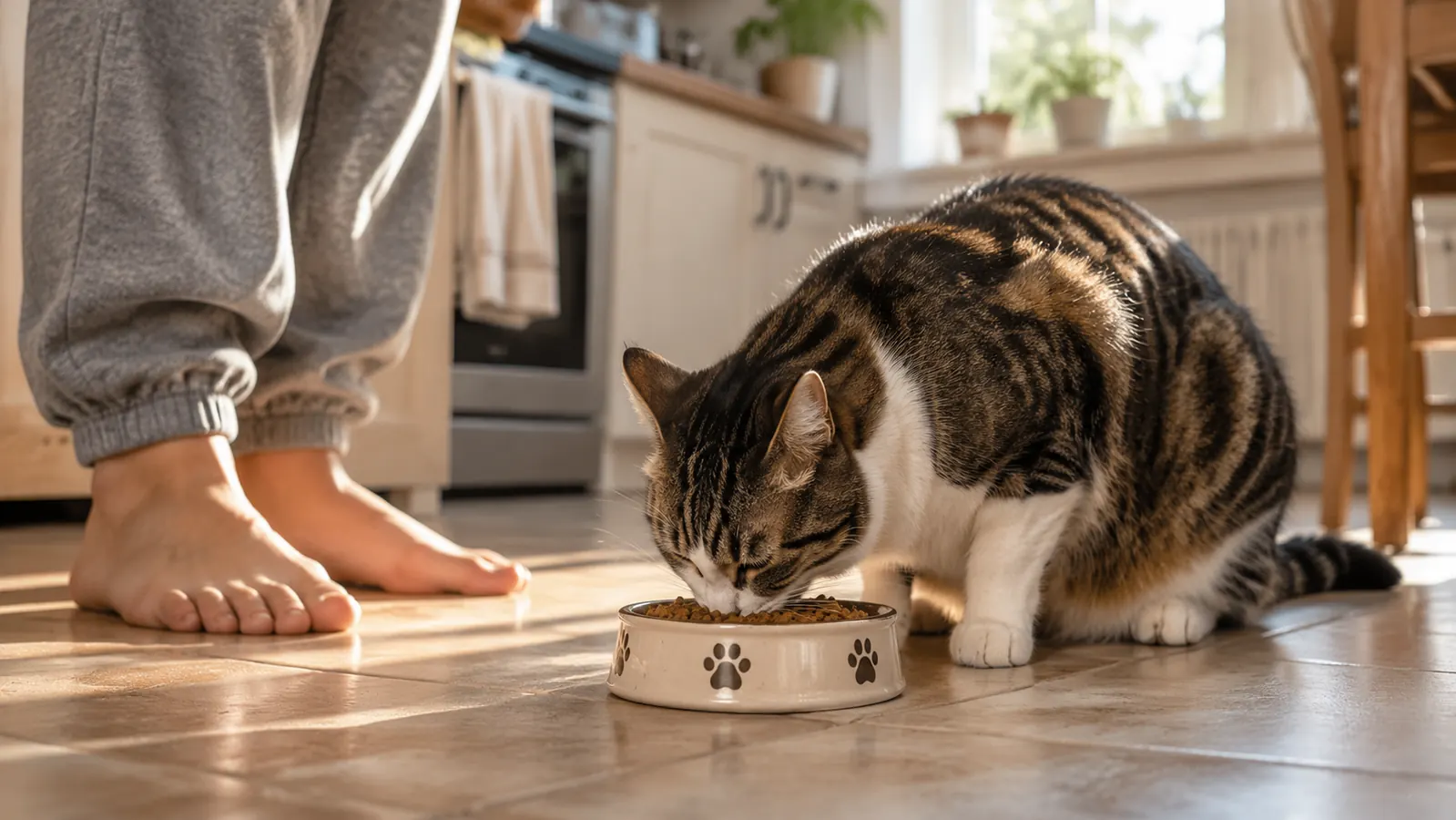
I would not squirt a new oil into a full bowl of food and hope. I would start with a small amount on the tip of a spoon, or mixed into a teaspoon of wet food the cat already likes, and I would let the cat decide. If the cat walks away, I would not force it. I would try a smaller amount next time. If the cat eats it, I would keep the meal small and boring so I can tell whether the oil caused any loose stool or vomiting. A senior cat can be sensitive. Slow is better.
I would also keep a note. The date I started, the amount I used, and what I saw. That sounds fussy, but it is how you avoid guessing. If Biscuit started a new oil on a Monday and stopped using the stairs on Wednesday, I want to know that. It may not be the oil. It may be the weather, a flare, or something else. But I want the note. I would bring it to our vet. I would not adjust the amount on my own. I started counting his stairs one morning last spring, with a cup of coffee and no particular plan. Biscuit came to the top, looked down, and took each one with a pause. I wrote down how many pauses. It sounds ridiculous. It gave me something to compare against three weeks later, and it kept me from calling something a win because he had one good day.
With Nordic Naturals, the unflavored liquid is easy to mix into wet food. With a salmon oil, the aroma may do the work for you, or it may be too much. Either way, I would not switch products every week. Give it time, watch the cat, and keep the vet in the loop. If you see vomiting, diarrhea, itching, or a change in appetite, stop and call. That is not a reason to push through.
Who Should Buy Which
Choose Nordic Naturals Omega-3 for Cats if you want a cat-specific liquid with EPA and DHA named on the label, an unflavored form, and a brand that states triglyceride form and batch purity. It is a good fit for the owner who reads labels and wants a small 2 oz (60 ml) product. Choose a salmon oil if your cat is a fish-lover who turns away from unflavored oils, and you have found a brand that states its sourcing, EPA and DHA content, and testing. If you cannot find those answers, do not buy on aroma alone. And either way, call your vet before you start, especially if your cat is on medication or has kidney, heart, or clotting problems.
The right oil is the one your cat will take and your vet can stand behind
If that is a documented, unflavored fish oil, Nordic Naturals Omega-3 for Cats is worth a look. If it is a salmon oil, hold it to the same standard: named EPA and DHA, clear sourcing, and real testing. Start with a vet call, not a cart.
Amazon Check Today's Price on Amazon →