
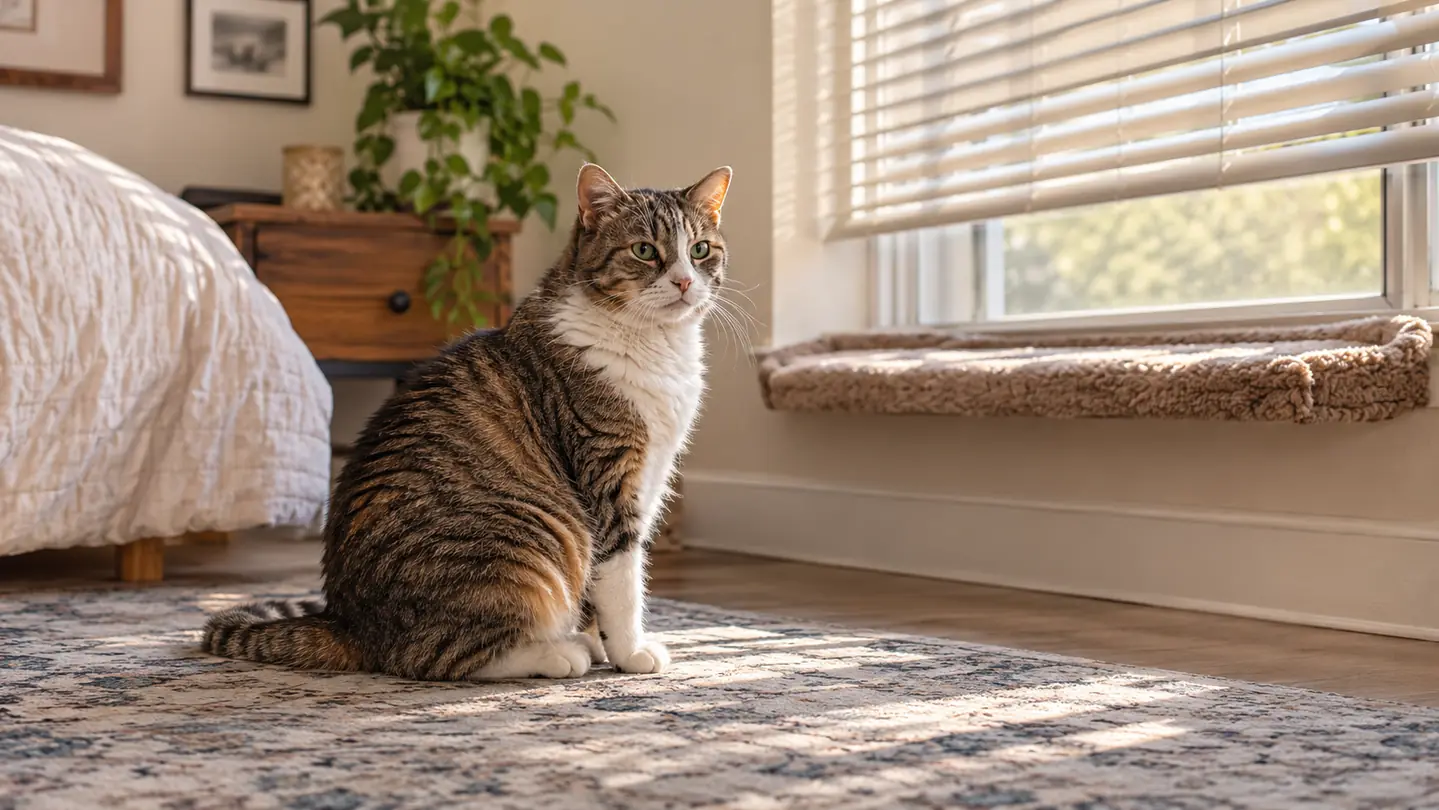
Biscuit turned fourteen last spring, and the first thing I noticed was not a limp. It was the pause. He would sit at the bottom of the two steps down to the screened lanai, look up, and take one step at a time. The low windowsill perch in the bedroom, a spot he had used every morning for years, went untouched for a week. I spent 22 years as a veterinary technician in a small-animal clinic, so I knew what those small changes usually mean. Our vet confirmed mild arthritis in his hips and back legs. Biscuit is an orange tabby, about eleven pounds, and he is not a dramatic cat. He does not cry. He just stops doing things. That is the part that gets missed.
When I brought home Pet Honesty Vet Backed Senior Cat Joint Supplement, chicken flavor, 300 count chews, I was not worried about whether he would eat it. I was worried about how to give it without turning every morning into a wrestling match. That is the real problem for a lot of senior cat owners. The supplement is not the hard part. The hard part is the handoff. A cat who feels trapped will remember it. A cat who gets a calm offer and a choice will usually come around. The routine below is what worked in our house, and it is the same routine I walk owners through when they call the clinic frustrated. I am not going to pretend that a chew fixed everything. It did not. What changed first was the routine. Once Biscuit stopped hiding when I reached for the container, I could actually give the supplement long enough to see whether it helped.
The chew that fits the routine you already have
Pet Honesty Vet Backed Senior Cat Joint Supplement is a chicken flavored crunchy bite with glucosamine HCL from shellfish, green lipped mussel, calcium fructoborate and manganese sulfate. The listing also names chondroitin and omega 3 fatty acids. It is not a cure for arthritis. It is a practical way to add joint support to a senior cat's day, if your vet says it is appropriate.
Amazon See the Pet Honesty Chews on Amazon →The Calm Routine That Worked for Biscuit
Step 1: Get your vet's sign-off and a baseline
Before you open the container, call your vet. I know that sounds like the boring answer, but it is the one that keeps you out of trouble. Senior cats often have more than one thing going on. Arthritis can look like a litter box problem, a dental problem, or a thyroid problem. A cat can have arthritis and bad teeth at the same time. If eating hurts, a new chew is not the answer. You want a diagnosis before you start adding things to the bowl.
Ask two specific questions. First, is this formula appropriate for my cat's health history? The label lists glucosamine HCL from a shellfish source. If your cat has ever had a reaction to shellfish, that belongs in the conversation. Second, how much should I give and how often? Use your vet's number, not the number on a blog, including this one.
While you are there, get a baseline. I made a note on my phone with four things: how Biscuit managed the two steps to the lanai, whether he used the low windowsill perch, whether he was missing the litter box, and how much he was grooming. That gave me something to compare against later. Without a baseline, every owner starts guessing by week three. Write the date on the container lid with a marker. That sounds fussy, but it stops the guessing about how long you have been at this.
Step 2: Put the chew beside the routine, not in front of the cat
Cats are routine animals. The easiest way to give a Pet Honesty chew is to attach it to something that already happens every day. In our house, that is the morning wet food. I set the container on the counter next to the can, not in the middle of the floor where it becomes an event. The cat sees the same sequence: I walk in, I open the can, I put down the bowl, and then I offer the chew. If your cat is fed twice a day, pick the meal when they are hungriest. For Biscuit, that is morning.
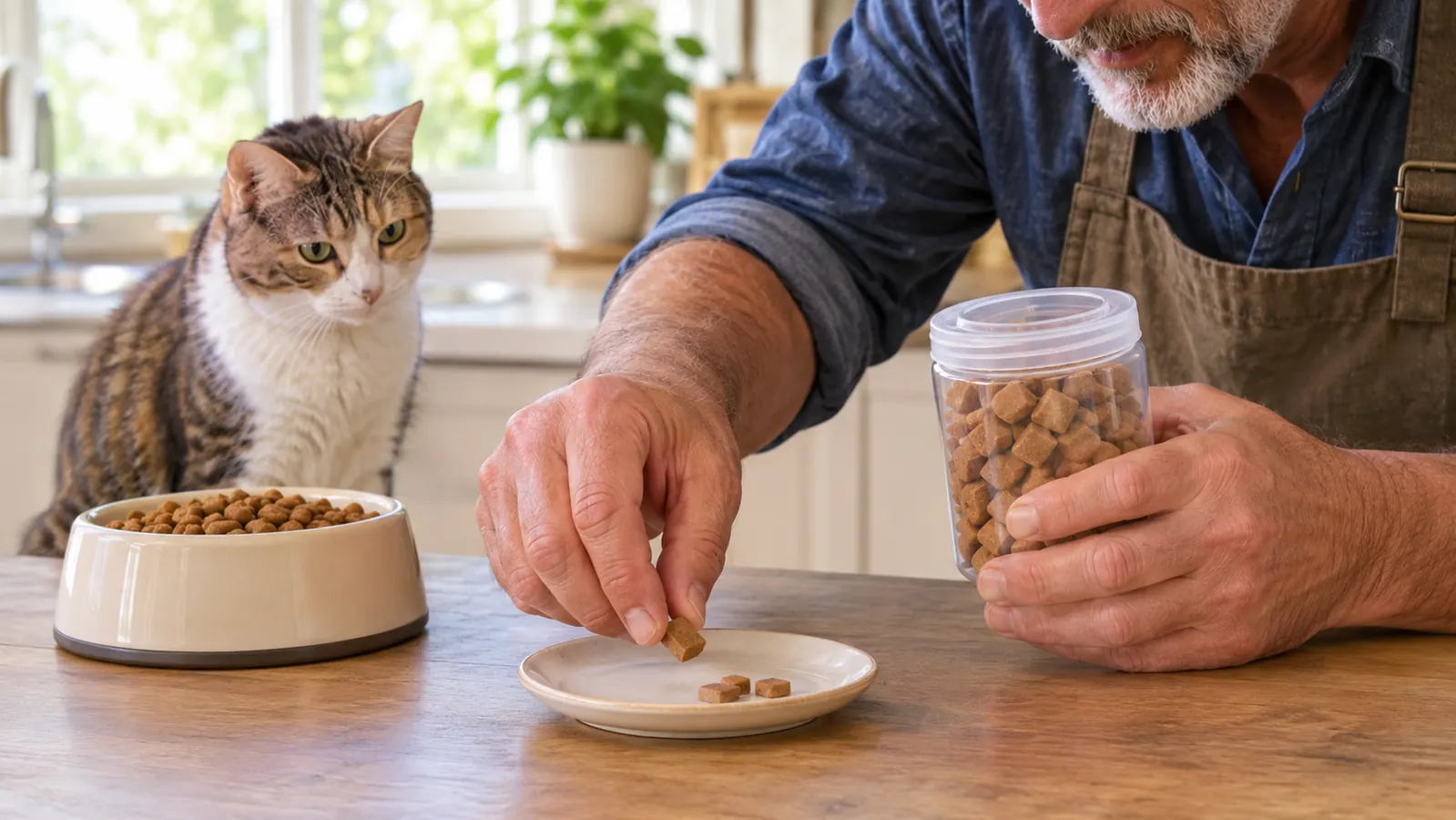
Offer it from a flat palm or set it on a small saucer. Do not chase. Do not call the cat over in a high voice like you are about to do something unpleasant. A calm voice and a boring handoff work better. If Biscuit walked away, I let him go. The next morning I tried again. The goal is not to win the first day. The goal is to still be doing this in three weeks. If your cat takes it and walks away, do not follow with another. Let the chew be the whole event.
The form helps here. These are crunchy bites, not capsules. I have watched plenty of cats spit out a capsule and then refuse anything that tastes like it for a month. The chicken flavor is also doing real work. The listing says 9 out of 10 cats love the flavor. Biscuit is one of them. That does not mean every cat will be, but it is a better start than a pill.
Step 3: If the treat test fails, use the food bowl
Some cats will take a chew from your hand on day one. Others need to see it near food before they trust it. If your cat walks away from the chew, do not force the issue. Put the chew on a small saucer beside the regular bowl and step back. Let the cat investigate on their own schedule. A cat that feels pressured will often eat the food and leave the chew. That is not a failure. It is information.
If that still does not work, crumble the chew over a spoonful of wet food. Use only the amount your vet approved. I would not mix it into a full bowl at first. If the cat eats half and walks away, you have no idea how much went in. A small spoonful makes it easier to see what is happening.
One caution: do not crush or mix a chew into food unless your vet says it is fine. Some products are designed to be eaten whole, and the label is the final word. With the Pet Honesty bites, the texture is part of the appeal. I would try the whole chew first, then a crumbled piece, then a smaller amount on food. Go in that order. Do not start with the most complicated method. If your cat has food sensitivities, ask your vet before you use wet food as a carrier. The chew is chicken flavor, but the food you use matters too.
Step 4: Keep the handoff boring
The fastest way to make a cat refuse a supplement is to make a production of it. Do not hold the cat down. Do not pry the mouth open. Do not wrap the cat in a towel unless your vet has told you to do that for a medical reason. A cat who learns that the chew means being restrained will avoid you at breakfast. A cat's memory for unpleasant handling is long. I have had owners tell me their cat hid under the bed for a week after one bad pill attempt.
Put the chew down. Step back. Go about your morning. If the cat eats it, fine. If not, pick it up and try again tomorrow. This sounds too simple to matter, but it is the difference between a routine and a fight. I have seen owners win the first morning and lose the next thirty because the cat learned to run.
Keep the container in the same place and use the same saucer. Cats notice small changes. If you switch bowls, switch rooms, and switch times every day, you are asking the cat to solve a new puzzle each morning. Boring is good. Boring is repeatable. If someone else in the house gives the chew, agree on the same approach. A cat getting a different routine from each person learns to shop for the easier one.
Step 5: Track mobility and comfort, not personality
A joint supplement is not a painkiller, and it is not a cure. The label describes joint health support. It may help some cats move more comfortably. It will not reverse arthritis. I say that plainly because owners get discouraged when their cat does not act like a kitten again. That is not the goal. The goal is a cat who is more willing to use the windowsill, take the two steps to the lanai, and get into the litter box without hesitating.
Keep notes for at least a month. I used the same four items from the baseline: the two steps, the windowsill, the litter box, and grooming. I also added a line for how Biscuit got up from lying down. Did he push up in one motion, or did he pause? That pause is the kind of detail you forget if you do not write it down. Take a short video of your cat walking away from you on a flat floor. It feels silly. It also gives your vet something better than a memory.
Stop and call your vet if you see vomiting, diarrhea, itching, refusal to eat, or any change that worries you. The listing says the formula supports joint health, antioxidant support, digestive health, heart health and immune support, and it is non-GMO. Those are label claims. They do not change the fact that you should watch your individual cat. A supplement is a small addition, not a replacement for a vet recheck. Results vary, and the cat in front of you matters more than any review.
Biscuit is fourteen, about eleven pounds, and living with mild arthritis in his hips and back legs. The chew did not turn him into a kitten. It made the morning routine calm enough that we kept going.
What a Realistic Morning Looks Like
Here is the actual sequence in our house, not the polished version. I get up, let the cat head butt my ankle, and open the can. Biscuit gets his regular breakfast. While he is eating, I take the Pet Honesty container out of the pantry and set a chew on a small saucer. I do not stand over him. I do not announce it. I put the saucer down a few feet from his bowl and walk to the sink.
Some mornings he eats the chew before the wet food. Some mornings he eats it after. Some mornings he ignores it and I put it back in the container for later. The point is that the offer is calm and repeatable. If he has a bad day and walks away, I do not turn it into a test of wills. The next morning is a new morning. That is the whole method. It is not fancy. It is just consistent.
The first week, I kept the saucer in the same spot. By the second week, Biscuit started checking the spot after breakfast. That was the signal I needed. He was not afraid of the routine. He expected it.
What Else Helps
The chew is one piece of a larger plan. Weight matters more than most owners want to hear. An eleven pound cat who gains two pounds is carrying a lot of extra load on sore hips. Ask your vet what a healthy weight looks like and feed to that number. Do not put a senior cat on a crash diet without guidance.
Make the house easier to use. A low sided litter box is kinder than a high sided one. A non slip rug at the bottom of the steps helps. Warm bedding in a quiet spot helps. A low windowsill perch or a step stool to the couch can keep a cat doing the things they already like. Trim nails if they are catching. And keep the vet recheck on the calendar. Arthritis is a long game, and the plan should change as the cat changes.
If your cat is painful, ask about other options. There are prescription pain medications and other treatments. A chew is not a substitute for those when they are needed. The best plan is the one your vet helps you build.
A calmer morning is the first win
If the fight is the reason the joint chew keeps getting skipped, start with the boring handoff in Step 2. Keep your vet's guidance, keep your notes, and give the routine time. Pet Honesty Vet Backed Senior Cat Joint Supplement is one option to discuss with your vet.
Amazon Check Availability on Amazon →