
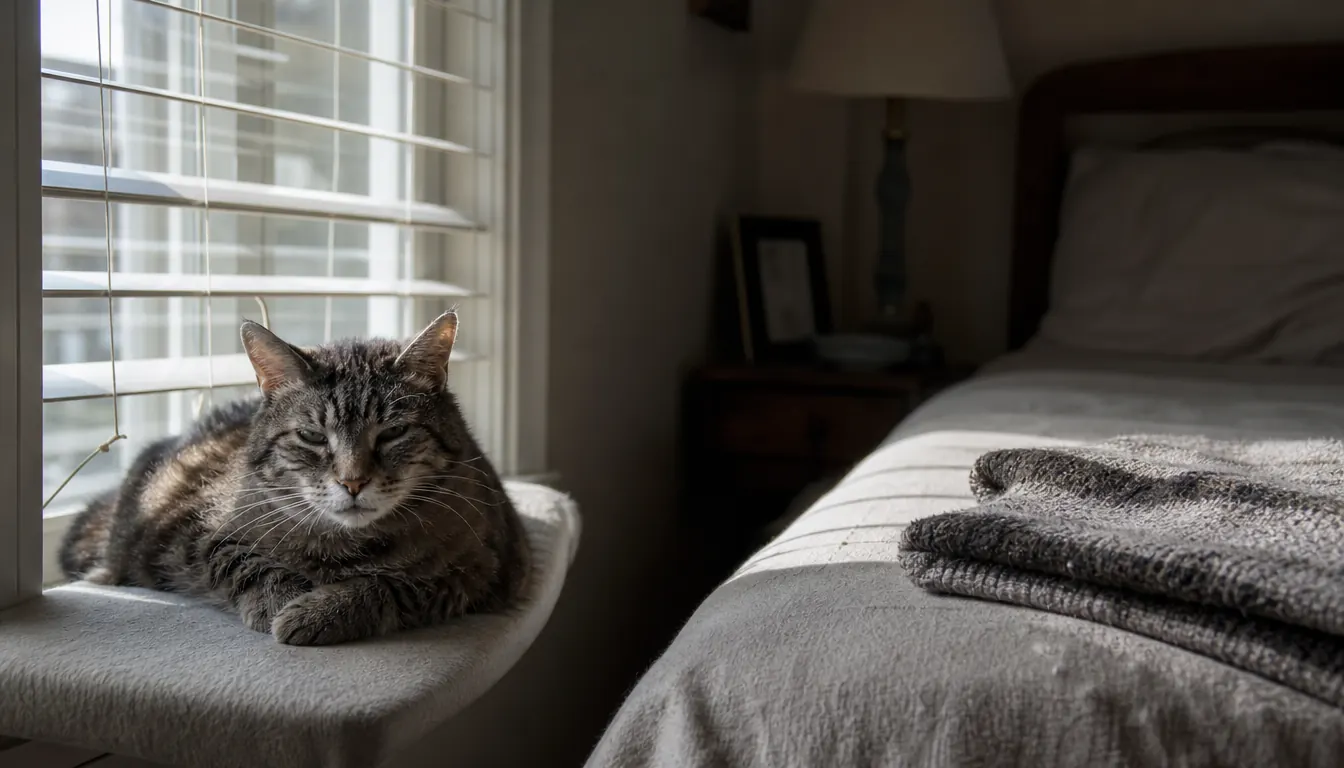
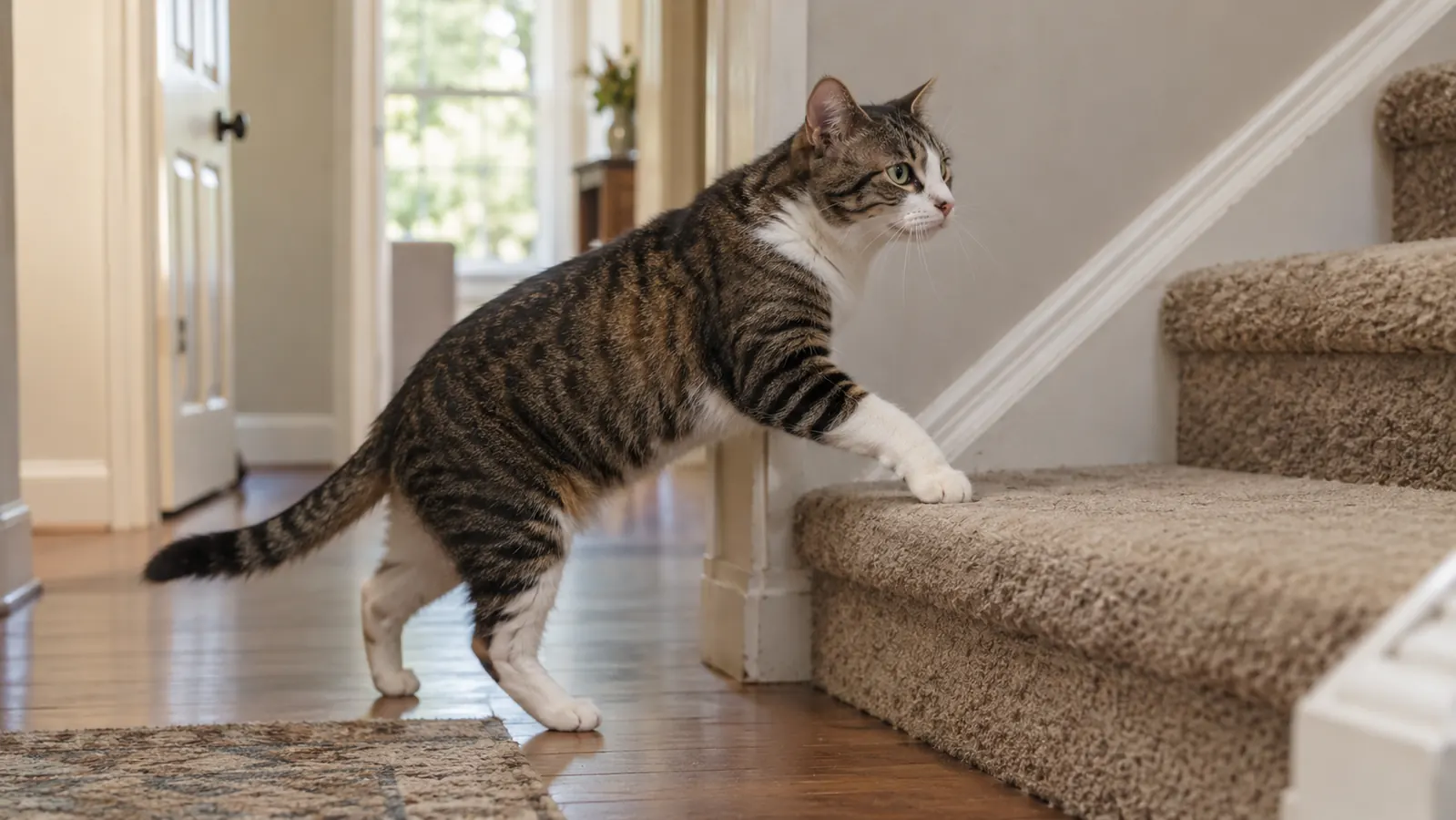
Every veterinary clinic has a version of this conversation. An owner brings in a fourteen-year-old cat and says the cat is fine, really, she just doesn't come upstairs much anymore. Then there is a pause, and the real sentence arrives: she missed the box again. I spent 22 years on the technician side of that conversation, and I got good at explaining that a cat is not being stubborn. I am on the owner side of it now. Biscuit is a 14-year-old orange tabby, about 11 pounds, and our vet diagnosed mild arthritis in his hips and back legs. The change was slow and specific. He stopped jumping onto the bedroom windowsill. He takes the stairs one paw at a time, front feet, then back.
When it is your own cat, you read labels differently than you used to. I went through the fish oils one at a time, and Nordic Naturals Omega-3 for Cats is the one I kept circling back to. It is also the one I had the most questions about, because a short ingredient list tells you what is in the bottle and nothing at all about what it is like to give it to a cat twice a day for four months. This is the review I wish someone had handed me in the clinic parking lot, before I spent money.
The Quick Verdict
A well-made liquid omega-3 with a short ingredient list that most cats will accept in wet food. The hard parts are the dose and the patience, and the bottle solves neither.
Amazon Check Today's Price →The Simplest Way to Add Omega-3 to a Senior Cat's Day
Nordic Naturals Omega-3 for Cats is 60 ml of unflavored liquid with EPA and DHA, made from wild-caught fish in the triglyceride form. Get the dose from your vet, then check today's price.
Amazon Check Today's Price on Amazon →How I've Used It With Biscuit
I want to be plain about where I started. I did not expect a fish oil to make my cat young again, and I would be suspicious of anyone who told me it had. What I wanted was narrow and boring. I wanted to add a source of EPA and DHA to his food without a wrestling match twice a day, and I wanted to be able to stop if it made him worse. That was the whole bar.
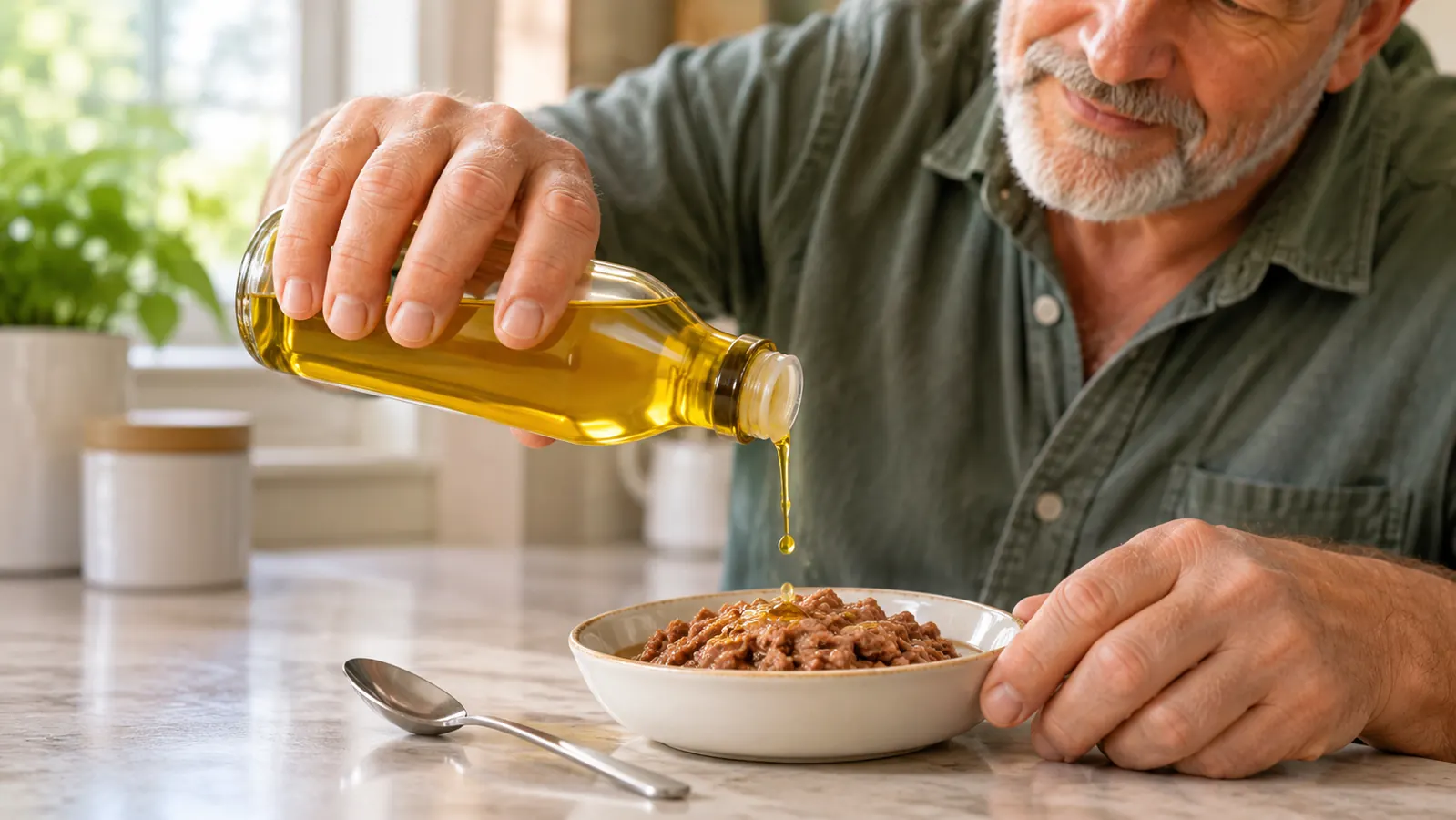
The bottle is small. Nordic Naturals lists it at 1.81 inches square and 4.38 inches tall, weighing 4.8 ounces, so it disappears into the fridge door and takes up no counter space. Biscuit eats wet food twice a day with dry food in between. I put the oil into the wet portions only, mixed all the way through rather than drizzled on top, because a cat will eat the first few bites of a bowl and walk away from anything with an oily patch near the bottom. Our vet worked out how much suits his weight. That is a conversation I would suggest you have rather than borrow a number from the internet, including from me. Dosing is the one part of this that is genuinely about your cat and not about the product.
The first week he ate it without noticing. The second week he noticed. I want to sit on that for a moment, because a lot of reviews stop at week one and that is where they mislead people. Cats are pattern detectors. A cat who licks the bowl clean on Monday can be sniffing the dish with suspicion by Friday, and it has nothing to do with the supplement and everything to do with a cat's firm belief that food should not change. Mixing it thoroughly solved it for us. On the two occasions it did not, splitting his portion into a small first spoonful and the rest in a second dish solved it, which sounds ridiculous until you have stood in a kitchen at six in the morning negotiating with a tabby.
One more thing about the mechanics, because it took me a month to get right. Pour slowly and from low down. A bottle tipped from six inches above the bowl sends oil across the rim and onto the counter, and you will not notice until you put your hand in it. I set the bottle down on the counter first, then tip it against the edge of the spoon. Sounds fussy. Costs you four seconds and saves you a paper towel every single day for four months.
What's Actually in the Bottle
The active ingredients are two fatty acids, EPA and DHA, carried in a liquid oil base. Nordic Naturals says the oil is in triglyceride form, which is the molecular shape those fatty acids take in fish itself, and that the fish is wild-caught. The listing describes the oil as being made to the same standard as the company's human products, a claim you can check on their own site if it matters to you. The label lists the product benefits as immune support and the specific use as coat. Those are the company's words, not a promise to your cat. I note the difference because supplement labels are written to be legal first and clear second.
It is unflavored, and that word does a lot of quiet work. Unflavored does not mean flavorless. Fish oil is fish oil. What the manufacturer means is that nothing was added: no chicken flavoring, no malt, no sweetener to cover the taste. That is a real advantage for a cat with allergies or a delicate stomach, and a real disadvantage for a cat who turns his nose up at anything that smells like the ocean. If your cat already refuses fish, this is not the format for you and no amount of mixing will fix it.
The bottle holds 2 fluid ounces, or 60 ml. How long that lasts depends entirely on the amount your vet sets, so I will not guess at it here. What I will say is that it does not last as long as people expect, and running out on a Tuesday night and deciding to restart next week is the most common way these things quietly stop. Whatever routine you build, build it around the bottle and not around your memory. I keep a note on the fridge with the date I opened it.
If you are new to fish oil labels, here is the short version of how to read one. Ignore the big number on the front that says how much oil is in a serving. Look for the breakdown underneath, the EPA and the DHA separately. That is the part that does the work. Two oils can weigh the same and carry very different amounts of those two fatty acids, and the front of the bottle will not tell you which one you are holding. This bottle prints the breakdown, which is one of the reasons I trust it more than the flavored chews I looked at. A chew with a strong smell and a nice picture of a salmon on the front can carry very little of either.
What Nobody Tells You About Giving It
Liquid fish oil generally wants to be kept cold once it is open, and the bottle's own label tells you what this one needs, so read it before you put it in the cabinet. I keep ours in the fridge door. That changes your routine in a small way that matters: cold oil is thicker, and if you dump it onto dry food straight out of the fridge it beads up and sits there like a warning. Let the measuring spoon sit in your hand for a minute first, or stir it into a wet portion that is already at room temperature. Tiny detail. It is also the difference between a cat who eats dinner and a cat who walks away from it.
The second thing nobody mentions is that you will get oil on your fingers and one wash will not take the smell off. If you are squeamish about that, ask the pharmacy for a small oral syringe and keep it in a drawer specifically for this. It makes the amount consistent, it keeps your hands out of the bottle, and it takes about four seconds. I wish I had done it in week one instead of week six.
The third thing is the one that matters most, and it is the reason I wanted to write this at all. This is a supplement, not a treatment. It will not reverse arthritis. If your cat is in pain, an omega-3 is not the answer to the pain. It may support joint comfort and it may help the skin and coat, and both of those are reasonable things to want for an older cat. But if your cat is hiding under the bed, yowling at night, or flinching when you pick him up, that is a vet visit and probably a pain plan. Not a bottle of oil. I would rather tell you that plainly and have you buy nothing than have you lose three months to hoping.
The fourth is a household one. If you have more than one cat, this gets complicated fast. You cannot easily tell who ate which bowl, and a cat who needs the oil may be the one who gets pushed off the dish by a younger, faster cat. In a multi-cat house I would feed the cat who needs it in a closed room with the door shut, every time, no exceptions. That is not a supplement problem. It is a feeding problem, and it is the one that sinks most at-home routines.
Unflavored does not mean flavorless. Fish oil is fish oil, and a cat who dislikes fish will tell you so by Friday.
The Part I'd Want a Friend to Tell Me
Nordic Naturals Omega-3 for Cats sits at about 4.2 stars across more than 2,400 reviews. That is a good score and an honest one, and the low reviews are worth reading before you buy, because they repeat. The first complaint is that the cat would not eat it. The second is that the owner got the bottle home and could not work out how much to give. Neither complaint is really about the oil. One is about a cat, and one is about a label that leaves dosing to your vet. Both are fair things to be annoyed about, and neither is hidden from you if you look.
The other thing I would tell a friend is that the smell is real and it lingers in a kitchen. Not badly, and not for long, but if you are someone who notices, notice now. I open the bottle, measure, cap it, and put it back before I do anything else. That order matters more than it sounds like it should.
And I would tell you that this is a maintenance sort of product, not a repair. The cats who seem to do well on it are the ones whose owners started early, kept the routine for months, and had a vet involved from the beginning. The cats who do badly are usually the ones whose owners expected a change in ten days, stopped on day twelve, and concluded it did not work. If you are not prepared to give it for at least eight to twelve weeks, save your money. I mean that kindly.
Last practical note. When the bottle arrives, check the cap and check the seal before it goes anywhere near the fridge. A 60 ml bottle of oil that has sat loose in a delivery van in a Florida August is not the same product as one that arrived sealed and cool, and you will smell the difference before you see it. Rancid fish oil is not dangerous in a small taste, but a cat will refuse it and you will spend a week convinced your cat hates the supplement when the truth is that the bottle was bad.
What I Liked
- Short ingredient list built around the two fatty acids that matter, EPA and DHA
- Triglyceride form, which is how those fatty acids occur in fish itself
- Unflavored, so nothing has been added to mask the taste
- Small 60 ml bottle that fits in a fridge door and stays out of the way
- Wild-caught fish and a stated commitment to batch purity testing
- Liquid mixes into wet food more easily than a capsule or a chew
- Prints the EPA and DHA breakdown, which many flavored chews do not
Where It Falls Short
- No cat-specific dosing guidance on the front, so you need your vet
- It still smells like fish, and some cats will refuse it no matter what you do
- Two ounces goes faster than most people expect
- It is not a pain treatment and will not reverse arthritis
- The unflavored claim is accurate but frequently misunderstood
- Cold oil thickens and beads on dry food if you pour it straight from the fridge
What I Noticed, and What I Cannot Prove
I am going to be careful here, because this is exactly where supplement reviews go wrong. Around week five I thought Biscuit was moving better. Around week nine I was sure of it. Then I wrote down everything else that had changed in those nine weeks and realized I had also increased his wet food slightly and moved a litter box into the hall so he would not have to cross the house. Any one of those could explain what I was seeing. That is not humility for its own sake. That is honestly what one cat, watched by one person, can tell you. Not much.
What I can tell you is narrower and more useful. His coat got softer, and I noticed that before I noticed anything else, which lines up with the coat use printed on the label. He is eating well. And about two months in, he went back up onto the bedroom windowsill. Once. Then twice in one week, and after that it was simply where he slept again. I do not know whether that was the oil, the extra wet food, the relocated box, or the plain fact that cats have good weeks and bad weeks and always have. I am not going to pretend I do. Anyone who tells you they know is selling something.
What I can also tell you is that he never refused a meal outright, never vomited, and never had a loose stool while on it. For something you are giving daily for months to a 14-year-old cat, that is not a small thing. Tolerance is most of the battle with any supplement, and this one cleared that bar in our house.
Trying It Alongside Other Things
A lot of owners ask whether they can keep the oil and still use a joint chew, or a prescription pain plan, or a prescription diet. The honest answer is that this is a question for your vet, and the reason is that combining things is where the arithmetic stops being obvious. I am not going to hand you a stacking plan. What I will say is that our vet knew about every single thing Biscuit was eating, and I wrote it down on one page rather than trying to remember it in the exam room. That page has been more useful to us than any single product.
The other thing worth saying is that this is not a replacement for the boring pieces. Keeping Biscuit's weight steady matters more than any bottle. A ramp onto the bed cost less and did more than the first month of oil. A litter box with a low entry, on the same floor he sleeps on, removed an entire category of problem. If you buy the oil and change nothing else in the house, you have made the hardest possible version of this for yourself and for your cat.
Who This Is For
This is for the owner of a senior cat in the early, quiet stage of stiffness. The cat who still jumps but thinks about it first. The cat who takes the stairs one at a time now. The cat who used to meet you at the door and now arrives a few seconds late. It suits a cat already eating wet food, because mixing is the whole delivery method, and it suits an owner who is willing to make the vet call, write down the dose, and keep a routine for three months without expecting a fast turnaround. If that is you, this is a sensible thing to try.
Who Should Skip It
Skip it if your cat refuses fish. Skip it if your cat only eats dry food and will not touch a wet portion, because you will end up with oily kibble and a hungry cat. Skip it if you have several cats and no way to control who eats which bowl, since you will not know what anyone is actually getting. And skip it, at least for now, if your cat is showing real pain signs, because the first call there is to your vet and not to a retailer.
Also skip it if you want a chew or a treat. This is a liquid, and there is no way around that. Some cats take it happily and some will treat a drop of oil in a bowl as a personal insult. You will not know which cat you have until you try, and I cannot tell you from here.
A Small Bottle, a Vet Call, and Three Months of Patience
Nordic Naturals Omega-3 for Cats is 60 ml of unflavored liquid with EPA and DHA, made from wild-caught fish in the triglyceride form and held to the same standard as the company's human oils. It is not a cure and it is not fast. It is a reasonable thing to try while you and your vet work out the rest.
Amazon Check Today's Price on Amazon →